Animal education: creating a refuge without reinforcing isolation
Hi, it’s Romane. To create a safe haven without reinforcing isolation, set up spaces where each animal can retreat, observe, and choose to join the others. Keeping apart is not always a problem: a shelter can be reassuring, but it should not become a place of permanent exclusion. Attentive animal care combines safety, gradual socialization, and respect for each individual’s pace.
Do this right away
- Provide an accessible hiding place without forcing the animal to stay there.
- Place resting areas away from noisy thoroughfares.
- Watch for signs of stress: a frozen posture, avoidance, restlessness, or loss of appetite.
- Offer a simple activity each day, suited to the species and the individual.
- Arrange introductions gradually, with the option to retreat.
Do this now: identify what reassures the animal and what prompts it to withdraw, then adjust the space without removing its safe haven. To rethink the setup of a resting area, see these tips about an animal that refuses its shelter and about keeping its space consistent.
Create an animal safe haven that protects without isolating
An animal safe haven should provide both a secure place and opportunities for animals to interact by choice. A dog or cat that hides does not necessarily need immediate stimulation: first, it may need calm, predictability, and its need for space to be respected.
Animal welfare depends on balance. Keep shelters accessible, but also place beds and observation spots in living areas. “Trust builds at its own pace”: let the animal decide when to come out and when it would rather be alone.
A chosen retreat, not enforced separation
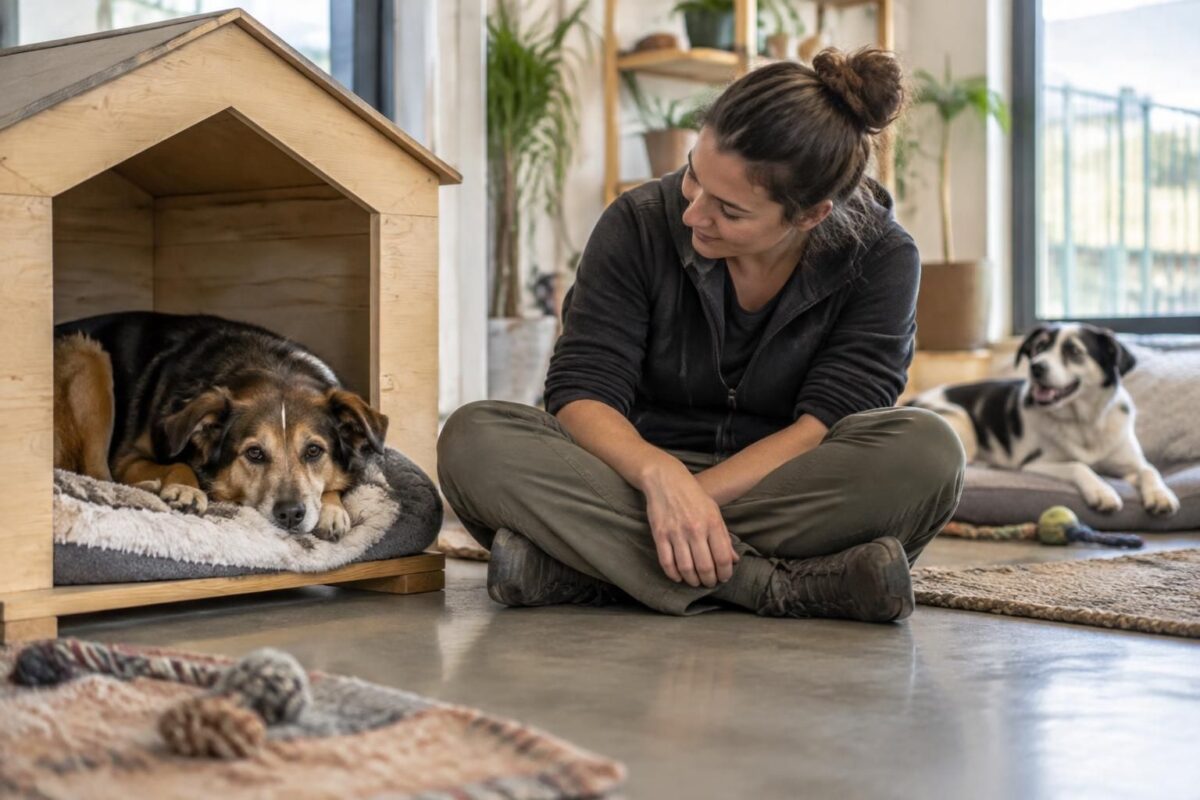
A safe space can be an open crate, a kennel, or a quiet corner, depending on the animal and the setting. It should remain a choice—not be used as punishment or as a place where a worried animal is routinely shut away.
Observe the animal’s habits at different times of day. If it stays hidden almost all the time, avoids contact, or undergoes a sudden change in behavior, also check its health and ask a veterinarian for advice.
Encourage socialization without forcing interactions
Socialization does not mean putting all the animals together. It involves positive, brief, and appropriate interactions, with the option to take breaks. A stimulating environment offers choices: sniff, explore, play, or simply watch from a distance.
A cat can start by observing another animal through a secure barrier. A dog can meet a newcomer during brief encounters in a space large enough to move away. Every step should remain calm; if an animal freezes or tries to flee, increase the distance and slow things down.
Two situations to distinguish
If the animal has just arrived, first let it explore a quiet room before gradually expanding its access. If it is an animal that was already living at the shelter and has suddenly started withdrawing, look for a change, pain, or a source of stress.
A three-step process for setting up a safe haven
- Step 1: observe. Note where the animal rests, what it avoids, and when it seeks contact. A few observations each day are often enough to reveal patterns.
- Step 2: offer choices. Create separate areas for sleeping, eating, playing, and retreating. Add simple activities, such as objects to explore or a suitable food-search activity, without cluttering walkways.
- Step 3: make gradual adjustments. Change one thing at a time, then see whether the animal uses or avoids it. Behavioral support can help if fear, conflicts, or isolation persist.
At a small shelter, a dog named Nino would stay at the back of his kennel when the hallway was busy. After his bed was moved away from the walkway and he was offered short, quiet outings, he began coming out to watch visitors on his own.
Adapt spaces and activities to everyday needs
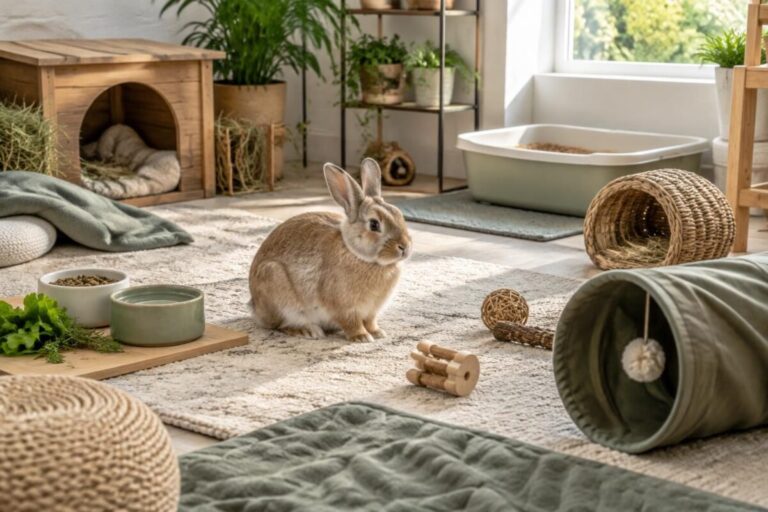
Environmental enrichment does not necessarily require major equipment. Elevated areas for some cats, open hiding places, scent walks, or objects to handle can already add variety to the day. Choose setups that are safe, easy to clean, and suited to each animal’s abilities.
A simple table can help you check that the shelter offers several options without turning every area into a place of constant stimulation.
| Observed need | Possible setup | What to watch for |
|---|---|---|
| Resting away from others | An open shelter in a quiet area | The animal can leave freely |
| Exploring | Safe objects or a simple course | The new item does not cause prolonged avoidance |
| Meeting other animals | Brief, supervised interactions | Each animal can move away without being followed |
| Feeling safe | Regular schedules and familiar cues | Changes are introduced gradually |
A good setup is one the animal uses while still having the freedom to choose. A calming safe haven does not eliminate stimulation: it makes it accessible, adjustable, and predictable.
Prepare for a responsible adoption and appropriate support
A shelter also helps prospective adopters understand an animal’s needs. Share its habits and preferences, as well as situations that may worry it. This transparency supports responsible adoption and helps avoid unrealistic expectations.
Before the animal leaves, share practical advice about settling in, first introductions, and rest periods. If difficulties arise, veterinary or behavioral follow-up can help guide adjustments without blaming the animal or the family.
Practical questions about animal care in a shelter
Should you engage with an animal that is hiding?
Not necessarily. Give it the option to retreat and observe its behavior. Offer a calm interaction, then respect its choice to keep its distance.
How can you prevent a shelter from reinforcing isolation?
Keep the shelter accessible and open, place it somewhere quiet but not cut off from all activity, and offer voluntary interactions as well as suitable activities.
How long should a new animal be left in a quiet space?
It depends on its history, health, and reactions. Take things gradually: expand its space and interactions as it explores and relaxes.
When should you seek behavioral support?
Ask for advice if the isolation persists, worsens, or is accompanied by fear, aggression, or a change in appetite. A veterinary examination can also rule out a medical cause.
Thank you for your interest; Romane