The animal’s habitat: this discreet placement changes everything at home
Hi, Romane here. To truly change your animal’s daily life, place its resting space in a quiet corner, protected from passages and drafts, but not cut off from the life of the home. Observe where it already likes to settle: this small clue often helps to find the ideal location. A good animal habitat respects its need for tranquility while promoting its welfare and comfort at home.
Do this now Identify the places where your companion spontaneously lies down, then choose a quiet corner without moving away from its landmarks. To refine the interior layout, also consult these tips to evaluate the space available for your animal and choose a basket, a mat, or a suitable den.
- Keep its bed away from doors, busy corridors and noisy appliances.
- Avoid direct sunlight, radiators and areas exposed to drafts.
- Keep water and useful items accessible, without cluttering its resting space.
- Give it a view of the room if that seems to reassure it, with the option to retreat.
- Observe its reaction for a few days before moving its bed again.
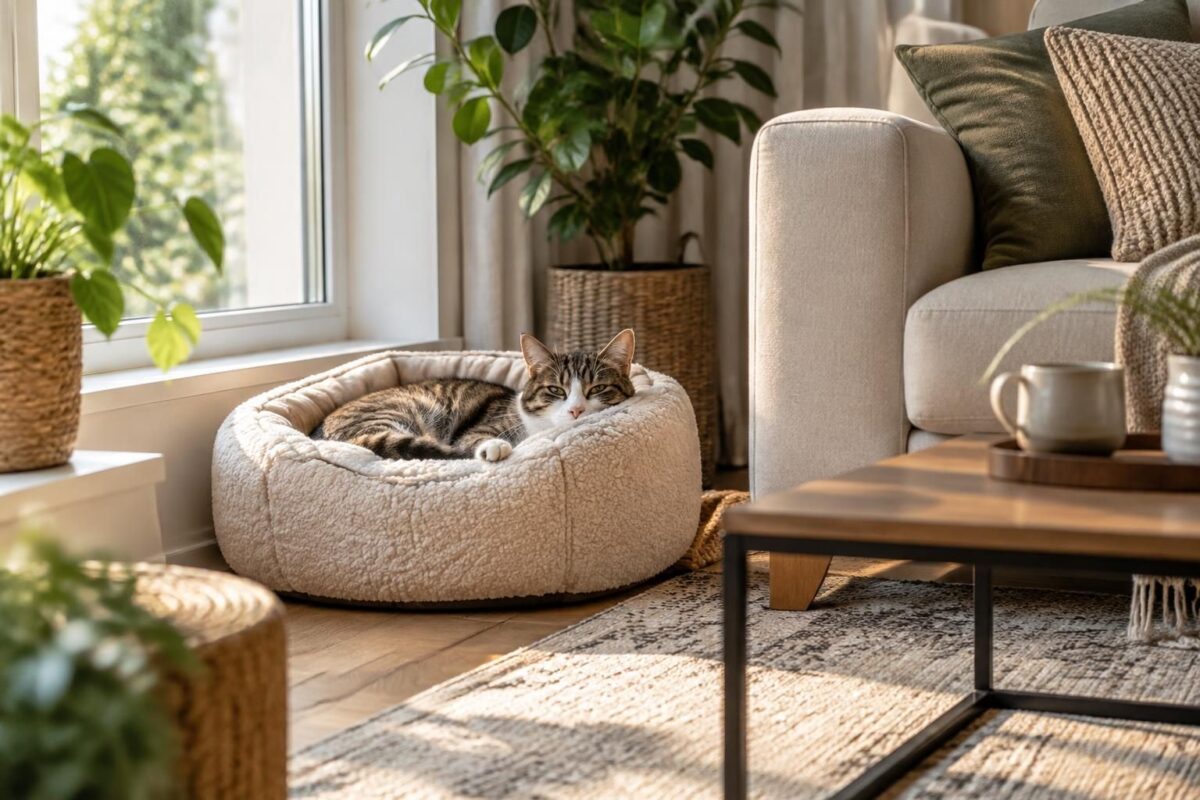
Discreet placement matters because an animal needs to be able to rest without being surprised or disturbed. A discreet corner near a wall can offer this protection, provided it stays accessible and does not become a thoroughfare. The goal is not to hide your companion, but to offer it an environment adapted where it can choose between presence and tranquility.
If your cat seeks heights or a hiding place, provide a stable space sheltered from handling. If your dog prefers to stay near the family, install its bed in a calm area of the living room, rather than in the middle of the hallway.
A family had placed their dog’s basket near the entrance, thinking he would like to supervise arrivals. He would rise at every passing; moved to a corner of the living room, he began resting there more easily.
A useful rule: the best location is the one the animal adopts without giving up its sense of security. “Calm helps rest, but choice helps trust.” This attention contributes to harmonious cohabitation and supports animal welfare on a daily basis.
For a dormouse found in the attic, the situation is different: this nocturnal rodent seeks a high, calm, and protected shelter. Nocturnal noises, moved materials, or droppings can signal its presence; avoid treating it as a pet and do not block an opening before you have checked that it is no longer inside. Domestic safety then involves observation, protection of openings, and, if necessary, the advice of a professional.
Proceed in three steps:
- Observe: note where your animal rests, the passages in the room and the sources of noise or drafts.
- Install: place its bed in a stable, calm and easy-to-access place, with its familiar objects.
- Check: see if it settles there by itself and adjust the location if its sleep remains often interrupted.
A video can also help you better understand the presence cues of a dormouse and its nocturnal lifestyle.
A well-executed interior arrangement doesn’t necessarily require more space: often, moving a basket a few steps is enough. The right placement respects your companion’s habits and makes its resting space more serene.
Thank you for your interest; Romane