Animal habitat : 4 zones to be planned from the outset
Hi, Romane here. From the start, plan a resting zone, a feeding zone, an elimination zone, and an activity zone, adapted to the species and your dwelling. A well-thought-out animal habitat helps your companion feel safe and facilitates daily hygiene. Each corner should meet a specific need, without crowding the space or hindering its movements.
To do right away
- Identify quiet spots, sheltered from foot traffic and drafts.
- Set up the sleeping area in a zone where your animal can retreat without being disturbed.
- Place food and water in a clean corner, away from the rest.
- Provide an accessible and easy-to-clean elimination space.
- Add appropriate activities: scratching post, hiding place, perch, or toys, depending on the animal.
To do right away: observe where your companion already likes to sleep, eat and hide, then organize the layout around its habits. To avoid a poorly placed or overly exposed corner, check out these tips to make its space more reassuring and understand why a spot near the passage may bother it thanks to this guide on making its space more reassuring and understand why a location near the passage can bother it thanks to this guide on the passage zones in its habitat.
The four essential zones of the animal habitat
A good space does not have to be large or sophisticated. It should mainly allow your animal to meet its needs without having to sleep next to its food or cross the room to reach its enclosure.
| Zone | What it’s for | What to plan |
|---|---|---|
| Rest zone | To sleep, withdraw, and recover. | A comfortable bed, in a quiet place, with a possibility of retreat. |
| Feeding zone | To eat and drink without stress. | Stable bowls, fresh water, and a surface easy to clean. |
| Elimination zone | To relieve itself in an accessible place. | A location separated from rest and meals, regularly maintained. |
| Activity zone | To explore, play, climb or expend energy. | Objects and surfaces suitable for the species, refreshed without turning everything upside down. |
These zones can sometimes be in the same room, but avoid placing them right next to each other. Separation often improves comfort, safety and hygiene.
A rest zone that protects from noise and bustle
Set the sleeping area away from doors, noisy devices, and high-traffic areas. Your animal should be able to rest without being touched or disturbed at every movement around the house.
A small hiding place can also help it feel calm. For an animal that likes to observe, choose a corner higher up or with a good view, if its species and physical condition permit.
A simple and clean feeding zone
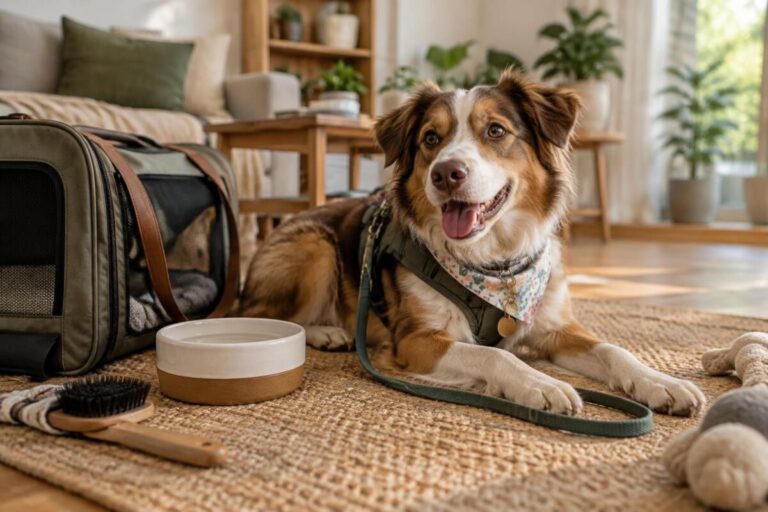
Choose a stable location, easy to wash, and where your companion can eat without being jostled. Keep the water accessible and check that it remains clean, especially if several animals share the housing.
Needs vary by species: the habits of a cat, a rabbit, or a dog are not interchangeable. “An adapted space starts with observation,” recalls a simple principle: watch how your animal actually uses its environment.
An accessible elimination zone that is kept separate
Place the litter tray or the area intended for needs away from bowls and the sleeping area. Choose a quiet location, but not so isolated that your animal hesitates to go there.
If your companion avoids this zone, first check its location, cleanliness and accessibility. A sudden change in elimination habits also warrants veterinary advice, as it may signal a health issue.
An activity zone that feeds its curiosity
Provide a space dedicated to play, exploration, and your animal’s natural behaviors. Enrichment can be very simple: toys to fetch, a tunnel, a scratch post, a perch, or objects to manipulate, depending on the species.
A recurring anecdote in consultations: a cat sometimes neglects a toy placed in the middle of the room, then uses it as soon as it’s moved near a hiding place. A small adjustment can thus make the space much more interesting.
Adapting the layout to the species and housing
A animal habitat is not limited to four accessories. It must also take into account the species-specific needs, age, mobility, and temperament of your companion. Habitats of farm, forest, mountains, savannah, or sea remind us of one important thing: every animal has needs related to its lifestyle, even when living at home.
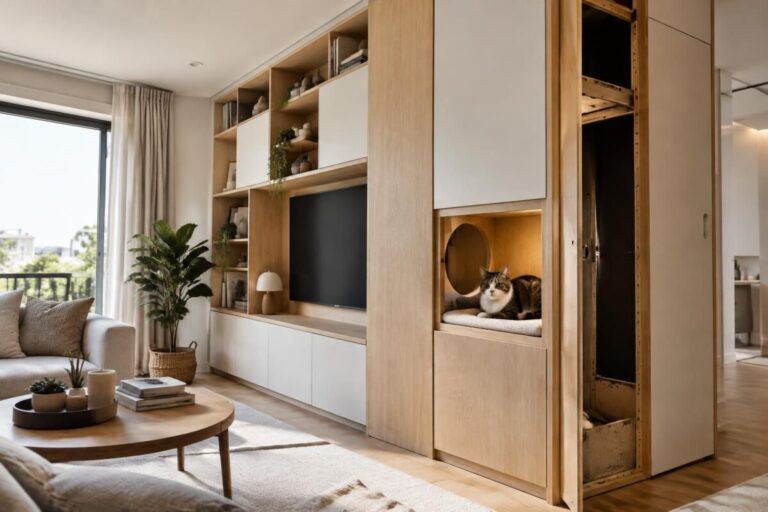
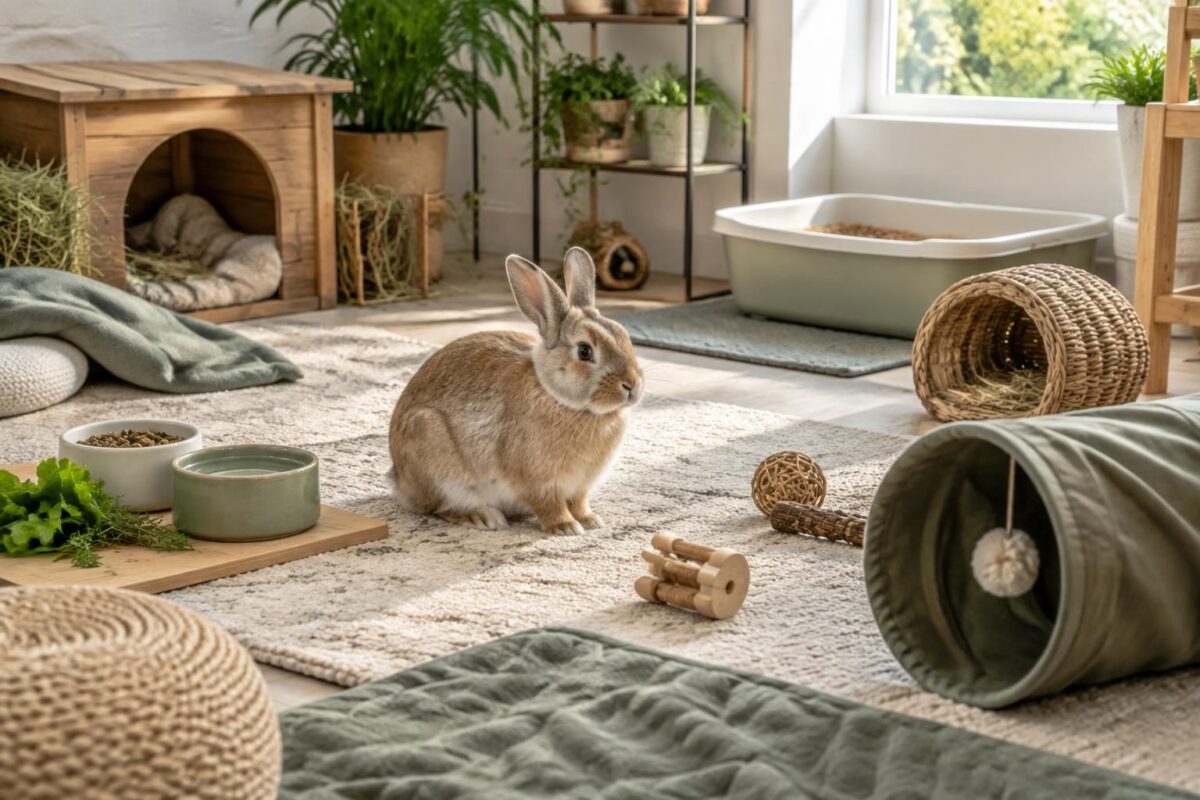
For a domestic animal, draw on its natural behaviors, without reproducing a wild environment. A cat often enjoys heights and hiding places; a rabbit needs space to move and opportunities to take cover. Seek advice from a veterinarian if you’re unsure about the appropriate installations.
If it’s a cat, provide climbing and hiding options. If it’s a rabbit, favour a secure on-the-ground space, with things to explore and to hide.
The three-step procedure to organize your space
- Step 1 : observe your animal for a few days. Note where it rests, eats, eliminates and plays, as well as the places it avoids.
- Step 2 : delineate the four zones while respecting its habits, the flow in the dwelling, and safety rules. Move cables, plants or objects that could be dangerous.
- Step 3 : introduce changes gradually. Keep its familiar landmarks, then check whether it uses the new spaces without signs of stress.
A successful layout is not fixed. If your animal goes around a zone or seems uncomfortable, move one element at a time and observe its reaction.
Daily checks to keep an eye on
A quick regular check is often enough to maintain a welcoming space. Clean the feeding and elimination areas, check the condition of the sleeping area, and refresh the activities when they no longer spark interest.
- Safety: remove unstable, toxic, or chew-accessible objects.
- Hygiene: wash the bowls and regularly maintain the sleeping area and the elimination area.
- Comfort: check the temperature, the calm, and the ease of access to each zone.
- Enrichment: offer varied activities, without overloading the space.
The best guide remains your companion’s behavior: a place it willingly uses and where it can retreat when needed is often a good starting point.
Frequently asked questions about the animal habitat
Les quatre zones doivent-elles être dans des pièces différentes ?
No. They can be in the same room if space allows, but separate rest, meals, and elimination as much as possible.
Où placer la zone de repos ?
Choose a quiet place, sheltered from passages and loud noises, where your animal can retreat without being disturbed.
Comment savoir si l’aménagement convient ?
Observe your companion’s habits. If it avoids a zone or suddenly changes behavior, check its location and comfort; seek advice from a veterinarian if this persists.
Faut-il changer souvent les jouets et les accessoires ?
Not necessarily. You can vary activities from time to time, but keep familiar anchors and introduce the changes gradually.
Merci pour ton intérêt ; Romane