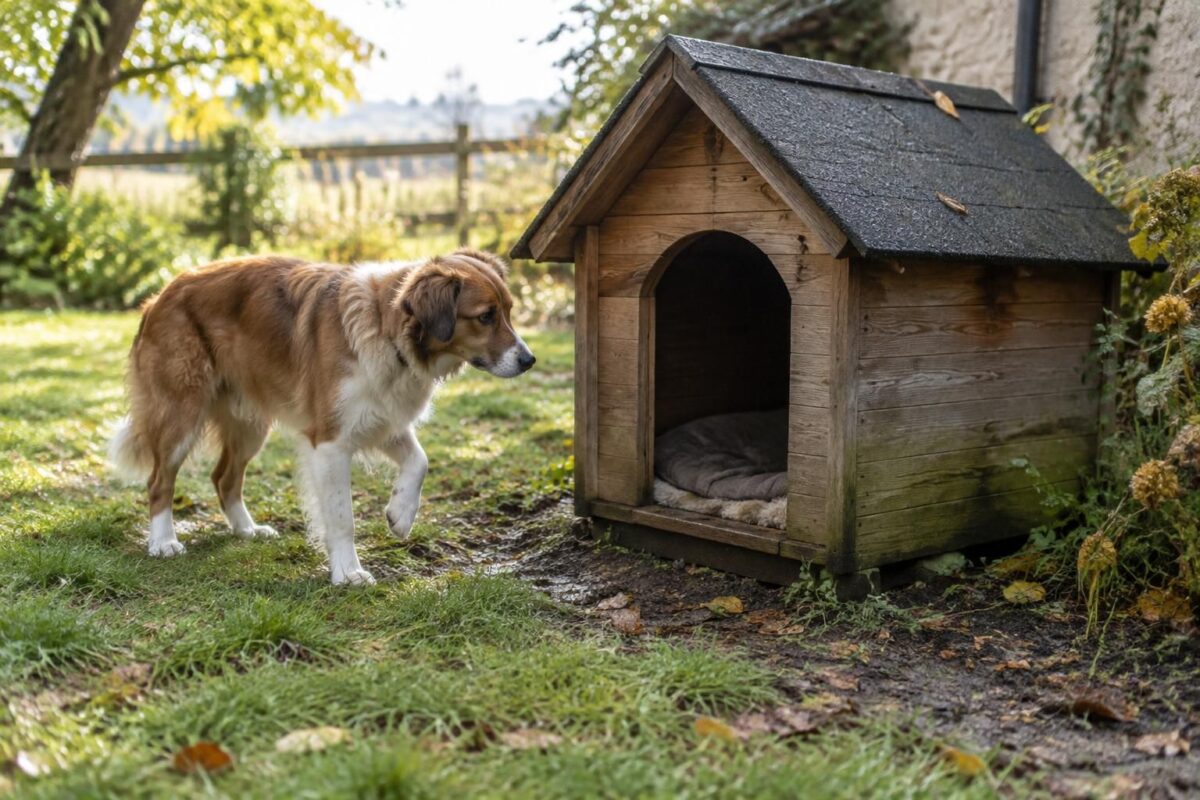
Animal behavior: he refuses his shelter, what needs to be reviewed
Hello, this is Romane. An animal that refuses its shelter often needs us to check its comfort, its location, its safety and how it has gotten used to it. Observe what happens just before its refusal: a noise, excessive heat or the end of an activity can give a clue. A simple and gradual correction is sometimes enough to make this place welcoming for it.
To do right away
- Check that the shelter is clean, dry and large enough for the animal to turn around and lie down.
- Control the temperature: avoid drafts, suffocating heat and a cold floor.
- See if the location is quiet, away from passages, noises and animals that could worry it.
- Inspect the shelter materials and remove any damp, damaged, or uncomfortable element.
- Invite your companion to approach with a treat or a toy, without pushing him to enter.
These initial checks help to identify a concrete discomfort before thinking about a behavioral problem. To better understand the shelter refusal in a dog, you can also consult these tips on the dog who doesn’t want to come home anymore and on the reassuring role of its shelter.
Why your animal sulks in its shelter
The animal behavior is often explained by what the animal feels in its environment. A shelter too warm, too exposed or associated with an unpleasant experience can become a place it prefers to avoid.
For a dog, the lack of outings and stimulation can also weigh: if it understands that going inside ends the game or the walk, it may delay. Walks suited to its age and health, scent games and varied activities help it balance its days better.
For chickens, a new arrival may stay inside because the outside seems unfamiliar or dangerous. These prey animals need time to acclimate to sounds, spaces, and the other members of the group.
Signs to observe before acting
A sudden refusal invites looking for a recent change: construction work, a new animal, a loud device or a modification of the setup. Trembling, whines or a curled-up posture can signal animal stress.
If the animal seems in pain, also refuses to eat or changes its behavior markedly, seek advice from a veterinarian. Physical discomfort may explain why it avoids a place or a habitual position.
| What you observe | Possible cause | First check |
|---|---|---|
| It approaches then leaves | Noise, smell or bad experience | Test the shelter in a calm moment |
| It avoids the shelter when it’s hot or cold | Inadequate temperature or uncomfortable floor | Check insulation and ventilation |
| A chicken stays with the group inside | Exterior environment still intimidating | Offer a sheltered and gradual outing |
Review the comfort, the location and the safety of the shelter
The comfort of the shelter depends on several details: a dry surface, an appropriate size and a bedding that does not slip. The cleanliness of the shelter also matters, because a strong odor or soiled litter can make it less attractive.
Choose a shelter location that is calm, but where the animal does not feel isolated. For a dog, the place must remain accessible and protected from the elements; for chickens, a covered outdoor space can help in acclimating to the surroundings.
The safety of the shelter involves a stable structure, with no sharp edges or easy access for predators. Also check that the appropriate temperature varies according to species, age, health and weather: an outdoor shelter is not necessarily comfortable year-round.
A female dog named Naya hesitated to enter her kennel after the installation of a loud device near the terrace. Once the device was moved and a familiar blanket added, she began to rest there again at her own pace.
“A shelter should reassure, not constrain.” Keep this idea in mind: the animal should be able to approach, leave and return without being chased or punished.
Set up a progressive habituation in three steps
- Step 1 : Leave the shelter accessible and associate it with something pleasant, such as a treat, a meal or a toy. Do not close the door and do not force entry.
- Step 2 : Reward small advances: looking at the shelter, sniffing it, placing a paw inside, then entering it. Keep sessions short and stop before the animal shows signs of distress.
- Step 3 : When it enters calmly, gradually increase the time spent inside. For a dog, also work on a simple cue like “in the shelter,” always followed by a reward.
Two situations require different responses: if the refusal is sudden, look for a change, a fear or possible pain; if a newly arrived chicken stays in its shelter, protect its first outings and give it time to find its bearings.
Avoid shouting, punishments, and chasing the animal: it risks associating the return with a negative experience. If its anxiety persists despite adjustments, a veterinarian or a behavior professional can help identify the cause.
Some guidelines for choosing the right response
Needs differ by species: a dog may need more activity or a return training, while a chicken may mainly request a gentle transition to a new space. Observe the reactions and proceed in small steps: trust is built through repeated and positive experiences.
Should you force an animal into its shelter?
No. Forcing it can increase its fear and make the shelter even less attractive. Check the comfort first and offer a gradual habituation with rewards.
Why does my dog suddenly refuse its kennel?
A noise, an uncomfortable temperature, a change near the kennel or pain can explain this sudden refusal. If other signs appear, seek advice from a veterinarian.
Is a chicken that does not leave its shelter necessarily sick?
Not necessarily. A new chicken may be intimidated by its environment or by the group. Observe its general state and facilitate calm and protected outings.
How long does it take for it to get used to it?
It depends on the animal, its experience and the environment. A few days may be enough in some situations, while others require a slower progression, depending on the shelter model and the situation.
Thank you for your interest ; Romane