
Animal Training: 5 Ways to Make the Space Appealing
Hi, it’s Romane. To make the space inviting, focus on comfort, light, safety, interaction, and suitable toys. A well-designed space meets each animal’s needs and encourages it to explore without overwhelming it. A few simple adjustments can already support its well-being and motivation.
5 ideas to make an animal-friendly space more inviting
Simple steps you can take today
- Set up a resting area away from foot traffic, with a comfortable bed and a place to retreat.
- Improve the light and airflow by making the most of natural light and ensuring good ventilation, without direct drafts.
- Add educational toys and objects to explore, then rotate them regularly.
- Make room for movement so the animal can move around freely and easily reach its water.
- Encourage interactions on the animal’s terms: offer suitable introductions without forcing contact or group living.
An inviting space doesn’t need to be large or expensive: above all, it should let the animal rest, move around, and make choices. For everyday comfort tips, check out these recommendations on improving comfort in animal facilities and this example of designing a dog-breeding space. Do this right away
A space designed for comfort and safety
Start by observing the animal’s habits. A dog that moves away from noise may be looking for a quiet refuge; a puppy that sniffs everything mainly needs supervised exploration and safe objects.
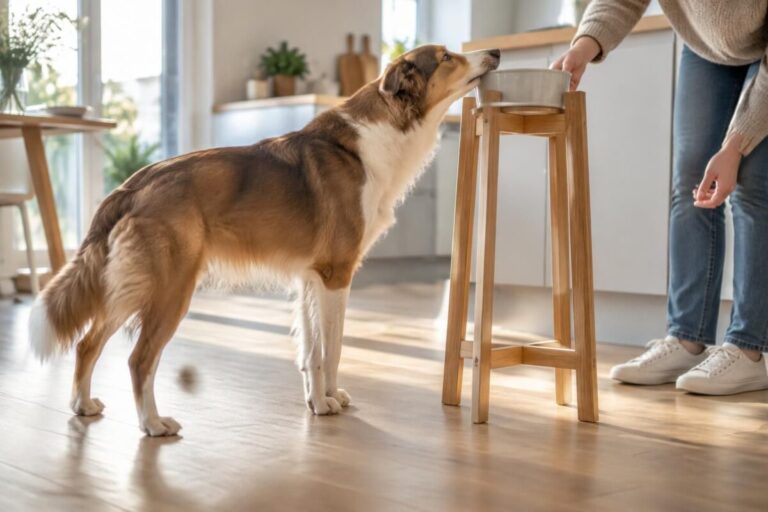
Proper ventilation, a comfortable temperature, and easy-to-clean surfaces all contribute to well-being. In a place that welcomes several dogs, provide separate resting areas and enough space to avoid competition over beds or water.
| Area | Useful features | What to observe |
|---|---|---|
| Rest | Comfortable bed, quiet corner | Does the animal settle there on its own? |
| Exploration | Varied objects, suitable toys | Can it discover them without feeling uneasy? |
| Movement | Clear pathways, access to water | Can it move around without being hindered? |
| Socialization | Gradual, supervised introductions | Can it keep its distance? |
Reducing noise also helps create a calmer atmosphere. Sound-absorbing materials and a quiet retreat can be especially valuable for animals that are sensitive to sudden sounds.
Soft colors and a space that invites exploration
Neutral tones and sturdy furniture make the space more calming for people and animals alike. Avoid cluttering the floor: a few carefully chosen objects are more likely to encourage exploration than a pile of toys.
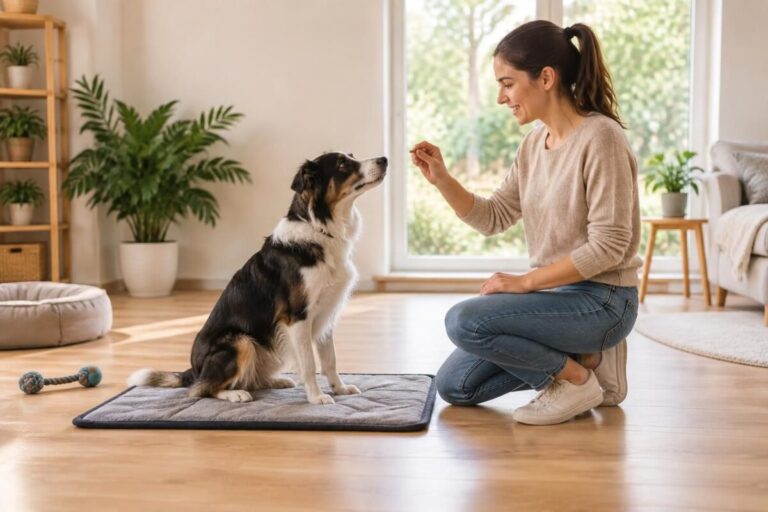
A brief anecdote illustrates this well: in a reception area, a dog hesitated to come in when a noisy toy was placed near the door. Once the toy was moved and a mat put down, the dog began approaching at its own pace.
“A relaxed animal is more willing to learn and explore.” Give it time to observe, then encourage its initiative with positive reinforcement: a reward, a gentle voice, or a break can help sustain its motivation.
Educational toys suited to each animal
Educational toys can stimulate an animal’s sense of smell, thinking, and coordination. Start with simple activities, such as finding a few hidden treats or touching a target, and stop before the animal shows signs of tiredness.
If you have a puppy, prioritize a safe space, brief discoveries, and objects suited to its size. If you have an anxious dog, keep new things at a distance at first and let it choose when to approach them.
To add variety to activities, a toolkit of dog-training exercises can offer ideas for socialization, recall, or getting familiar with different objects. Enriching the environment of an anxious dog also calls for a gentle, predictable progression.
A three-step method to improve the space
- Step 1 — Observe. Notice where the animal sleeps, plays, drinks, and goes to be alone. Make a note of places it avoids.
- Step 2 — Adjust. Clear the pathways, set up a quiet corner, and offer one or two suitable toys. Make sure the water is easy to reach.
- Step 3 — Evaluate. Let the animal discover the changes at its own pace. Keep what interests it and remove anything that seems to bother it.
Making one change at a time makes it easier to understand the animal’s reactions. Animal training becomes more enjoyable when the space supports learning instead of adding distractions.
Frequently asked questions about designing an animal-friendly space
How can I make a space inviting without spending much?
Reorganize the areas, clear the pathways, and offer simple toys suited to the animal. A calm, comfortable space and the ability to choose often matter more than the price of the accessories.
Should I let several dogs share the same space?
Socializing can be beneficial if the dogs are compatible and can move away from one another. Provide separate resting areas and supervise their interactions.
How often should I rotate educational toys?
You can rotate the objects every few days or based on the animal’s reaction. Keep its favorite toys accessible and regularly check their condition and safety.
What should I do if the animal avoids a new setup?
Don’t force it to approach. Move the new item farther away or make it less challenging, then let the animal explore at its own pace, pairing voluntary approaches with a positive experience.
Thank you for your interest; Romane