Pet Accessories: Enclosed Kennel or Open Bed, Which Should You Choose?
Hi, Romane here. To choose, observe where your pet likes to rest: an enclosed den if they’re looking for a cozy retreat, an open bed if they prefer to keep an eye on their surroundings. The right bed should let them stretch out and turn around comfortably. Their temperament, age and room temperature matter just as much as the bed’s appearance.
What to do right away
- Notice where your pet naturally settles down.
- Check whether they like to hide or stay out in the open.
- Measure their body while they’re lying down to choose the right size.
- Choose a quiet spot away from drafts and foot traffic.
- Opt for a washable cover or a bed that’s easy to clean.
These simple steps help you choose a bed that suits your pet, rather than an appealing model that they’ll hardly use. To compare styles designed for dogs, check out this guide to dog beds, then discover the options for a cat choosing between a den and a bed.
Enclosed den or open bed: personality makes all the difference
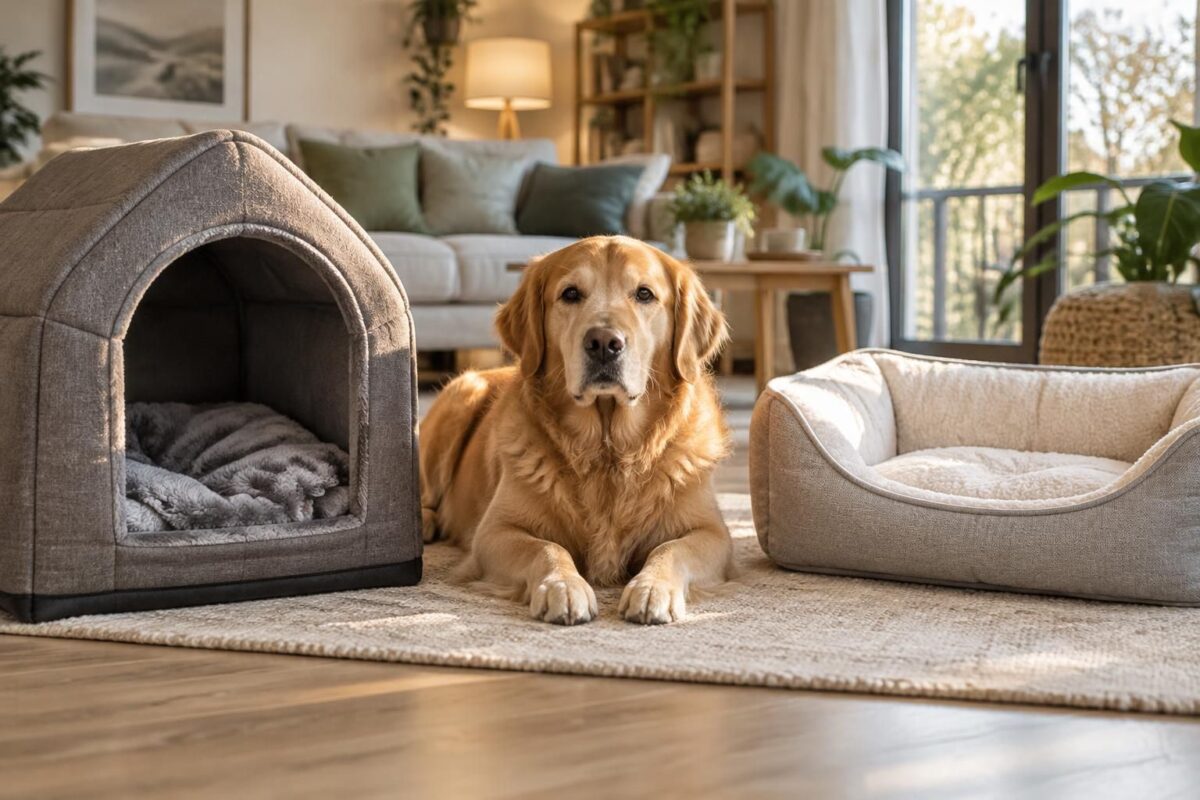
An enclosed den surrounds your pet and limits visual stimulation. It may suit a cat that retreats under furniture or a dog looking for a quiet spot, as long as they can come and go freely.
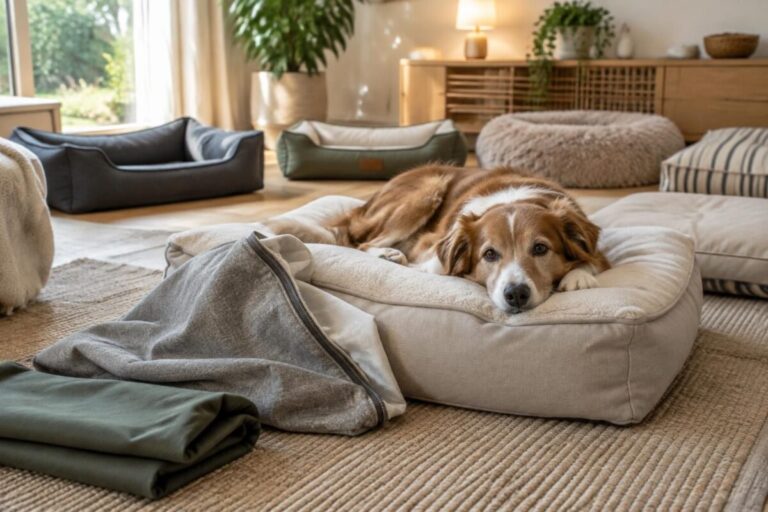
An open bed lets your pet stretch out, see the room and keep an eye on what’s happening. It often suits sociable or curious pets, as well as those who enjoy the warmth of the sun without being enclosed.
If your pet often hides… try a den or a bed with high sides, without blocking the entrance. If your pet rests out in the open… offer them an open bed that’s large enough for them to change position.
One evening, Milo, a cat who always slept under a chair, finally took to a small den placed in a quiet corner. He could retreat inside while keeping the exit clear.
Pet beds and accessories, by their benefits
| Option | Main benefit | What to watch for |
|---|---|---|
| Enclosed dog den | Creates a sheltered space, useful indoors if the dog likes it. | The right size and good ventilation are essential. |
| Open dog bed | Easy to move and practical for a pet that likes to observe. | Choose comfortable filling and a washable cover. |
| Cat bed | Provides an open place to sleep, often enjoyed near a window. | Avoid sides that are too high if your cat is older or has trouble jumping. |
| Insulated den | Can provide protection from the cold in a well-designed outdoor shelter. | It should stay dry, be well ventilated and be placed out of direct sunlight. |
How to choose a den or bed without getting it wrong
The bed should be large enough for your pet to stretch out and turn around easily. A den that’s too spacious may lose its snug feel, while a bed that’s too small can make it hard to rest. If you’re setting up an outdoor dog shelter, also check the insulation, rain protection and raised floor.
The fabric should be comfortable and durable, as well as easy to clean. A removable cover makes care easier; a stable base keeps the bed from sliding when your pet climbs onto it. Avoid decorative parts that your pet could tear off and swallow.
“The best bed is the one your companion chooses to rest in.” A comparison of dens and beds can help guide your purchase, but your pet’s habits are still the most useful guide.
A three-step approach to finding the right bed
- Observe: for a few days, note whether your pet prefers hiding places, open surfaces, elevated spots or being close to people.
- Choose: select a shape and size that match their habits. For an older or recovering pet, look for a stable bed that’s easy to get into and provides enough support.
- Try it out: put the bed in a quiet spot, then let your companion explore it at their own pace. If they avoid it, try a different location before changing the model.
For a cat, a hammock or elevated platform can complement a bed or den, especially if they like to watch the room. A dog looking for a retreat may prefer an indoor den, but it should never become a place where they’re confined against their will.
Location and care: the details that make a difference to comfort
Place the bed somewhere quiet and accessible, away from drafts. Avoid prolonged exposure to direct sunlight, especially for an outdoor shelter or a plastic structure, which can heat up quickly. A spot where your pet can retreat while still being close to family life often works well.
Remove hair regularly and wash the covers according to the manufacturer’s instructions. Also inspect the seams, padding and any signs of dampness: a clean, dry space helps keep your pet comfortable every day.
A few useful questions before you buy
Is an enclosed den suitable for all dogs?
No. It may appeal to a dog looking for a quiet place, but a dog that prefers to keep an eye on the room may be more comfortable in an open bed. Always leave the entrance unobstructed.
Where should you put your cat’s bed?
Choose a quiet spot that’s easy to access and away from drafts. A window may appeal to them if they like to watch the world, as long as the bed is placed securely and steadily.
Which bed should you choose for an older pet?
Choose a stable bed that’s easy to get into. A bed with a low entrance and comfortable support may be more practical than a den that’s difficult to access.
How can you tell if the bed suits your pet?
See whether they return to it on their own, can stretch out in it and seem relaxed. If they avoid it, first try a different location, then a different style.
Thanks for your interest; Romane