Pet Accessories: 6 Purchases to Keep Things Tidy
Hi, Romane here. Six well-chosen purchases — a feeding station, a kibble container, targeted storage solutions and suitable equipment — help keep your home clutter-free. The secret isn’t to accumulate things, but to give everything a designated place. Before you buy, observe your pet’s habits and measure the available space. A practical accessory should also be safe, easy to clean and suited to your pet’s size.
Do this right away
Do this now: identify the items lying around, choose one area for meals and another for outings, then check the measurements before making any purchase. To compare selection criteria and avoid unnecessary spending, also check out these tips for choosing accessories for your companion and these tips for shopping smart.
- Gather the toys your pet uses and remove any that are broken.
- Choose a quiet, washable spot for meals.
- Store kibble in a sealed container, out of reach.
- Install a leash hook near the exit.
- Set aside a storage basket for everyday accessories.
Six useful purchases for a clutter-free home
Every purchase should meet a specific need. Good pet storage also makes cleaning easier and saves you from searching for the leash or brush at the last minute.
1. An easy-to-clean feeding station
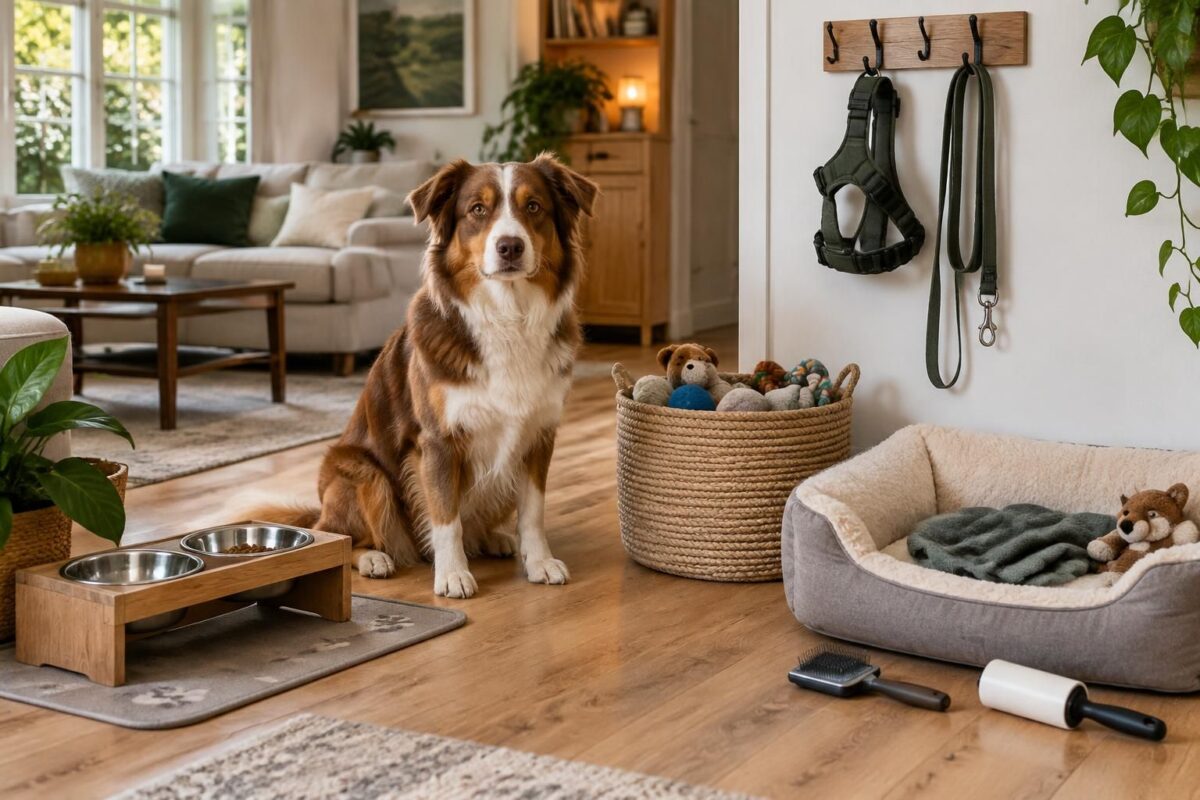
Place the food and water bowls together on a non-slip mat. For a cat, wide, shallow bowls may be more comfortable; for a dog, a stable bowl helps prevent spills. Stainless steel and ceramic are easy to wash and retain few odors.
A well-positioned feeding station reduces scattered crumbs. Keep it away from the litter box and in a spot where your pet can eat in peace.
2. An airtight kibble container
A sealed container protects food from moisture and keeps open bags off the floor. Choose a container that is easy to open and clean, and compact enough to fit in a cupboard. Write the opening date on the original bag and keep the storage instructions.
If your pet is on a special diet, keep its food separate and clearly labeled. Simple storage helps the whole family avoid mix-ups.
3. A toy organizer suited to your pet’s habits
A toy organizer or storage basket is often all you need to gather balls, plush toys and puzzle toys. Choose a stable model with no small detachable parts, and place it within easy reach without blocking the way.
Rotate the toys: leave a few within reach and put the others away to bring out later. A forgotten toy can feel exciting again without taking over the room.
4. A leash hook near the exit
Mounted at a convenient height, a leash hook keeps the leash, harness, ID tag and waste bags together. Make sure the hook is sturdy and that your pet can’t chew on the accessories when left alone.
The harness should fit properly and not restrict movement. For car trips or visits to the vet, a carrier suited to your pet’s species, with good ventilation and easy-to-clean surfaces, can also save you from looking for a solution at the last minute.
5. Compact grooming storage
A box or dedicated pouch can hold a brush, comb and nail clippers. Choose tools suited to your pet’s coat and species; keep sharp items out of reach of children and pets. Grooming products should be suitable for your pet and used according to a professional’s advice.
After brushing, put each tool back in its place. This routine limits scattered fur and makes it easier to plan for basic grooming.
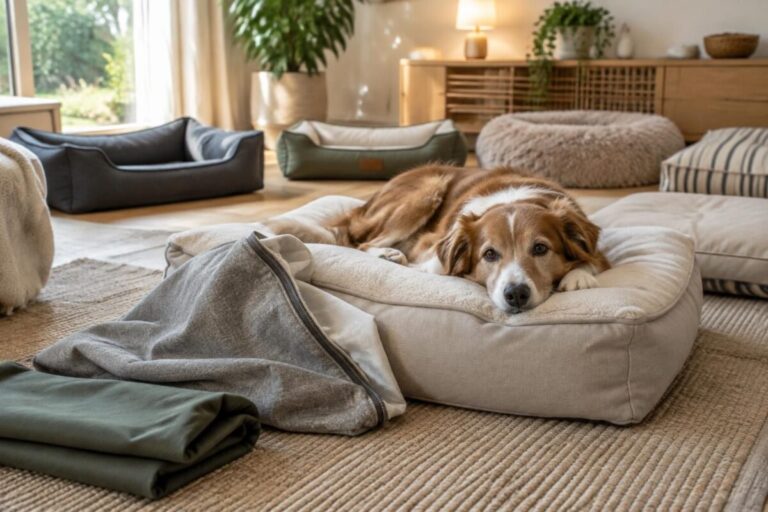
6. A washable bed with a designated spot
A bed with an easily removable cover makes cleaning simpler. It should allow your pet to lie down and stretch out comfortably. A cat that likes to observe its surroundings may prefer a raised bed; an older dog may prefer a thick, easy-to-access cushion.
Place the bed in a quiet corner, away from drafts and foot traffic. “A useful item is one your pet can use comfortably.”
Compare purchases before filling your cart
The right choice depends on your space, your pet’s size and its habits. These guidelines help you prioritize without buying a complete set of equipment all at once.
| Purchase | What it’s for | What to check |
|---|---|---|
| Feeding station | Keep food and water together | Stability and ease of cleaning |
| Kibble container | Store food safely | Seal and suitable capacity |
| Toy organizer | Keep toys off the floor | Stability and no small parts |
| Leash hook | Get ready for outings quickly | Secure mounting and a safe location |
| Grooming storage | Keep grooming tools together | Keep out of children’s reach |
| Washable bed | Create a clean resting space | Size, comfort and removable cover |
Set up the accessories in three steps
- Step 1: For a few days, observe where items pile up and what your pet actually uses. Measure the available areas before choosing storage containers.
- Step 2: Assign a place to each category: meals, outings, play, rest and grooming. Keep dangerous or fragile products out of reach.
- Step 3: Try out the arrangement, then adjust it after a week. If an accessory goes unused or gets in the way, move it or replace it rather than adding another one.
Two common situations
If toys take over the living room, an open basket and regular rotation may be all you need. If outing gear gets scattered, keep the harness, leash and bags together by the door, but out of reach of curious teeth.
A story often comes up during consultations: an impatient dog became more relaxed about heading out once its leash and harness were always kept in the same place. This small change also saved its family from last-minute searches.
Useful pet accessories that don’t take up too much space
Before making any purchase, ask yourself whether the item improves comfort, safety or upkeep. When it comes to pet accessories, size and materials matter just as much as appearance; a poorly suited product can bother your pet and end up at the back of a cupboard.
Effective storage doesn’t have to be complicated: a few washable containers, a designated spot for outing gear and a limited selection of toys are often enough. The goal is a clutter-free home where your companion can still access what it needs.
Practical questions about storing accessories
Which accessories should I buy first to avoid clutter?
Start with a feeding station, a kibble container and a toy basket. Add a leash hook if outing gear often gets scattered.
Where should I store my pet’s food?
Use a clean, sealed container and keep it in a cool, dry place. Keep the storage information and avoid leaving food where your pet can access it.
How do I choose a safe storage basket?
Choose a stable model that is easy to clean and has no detachable parts your pet could chew on. Place it away from walkways.
Should I buy a carrier even if my pet rarely goes out?
A carrier or crate may be useful for a trip to the vet or an unexpected journey. Check the ventilation, closure and space your pet needs.
Thank you for your interest; Romane