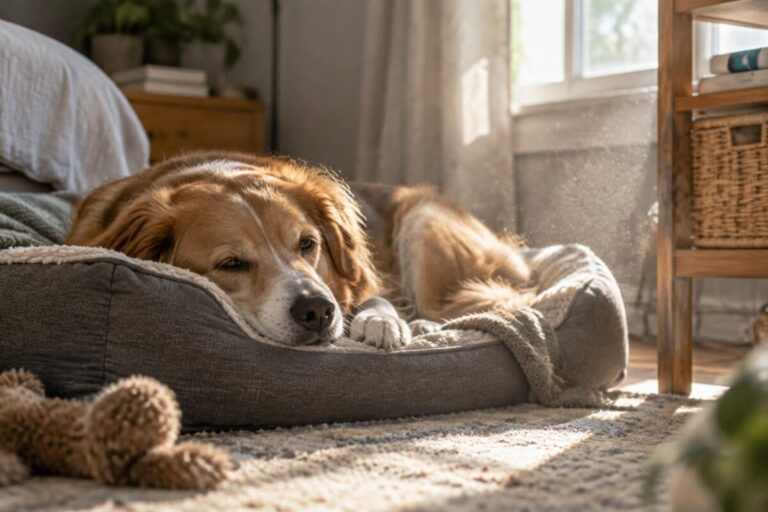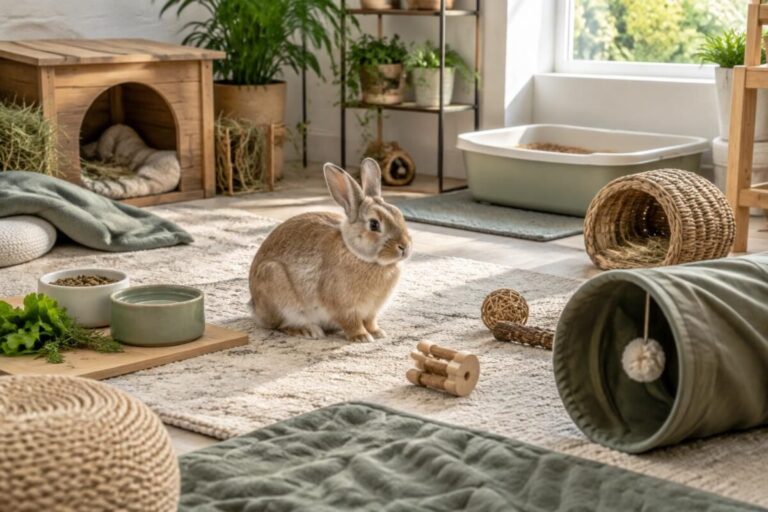

The animal’s habitat: too many objects quickly ruin its space
Hi, Romane here. Too many objects can clutter your pet’s living space: keep a few suitable toys within paw’s reach, put the rest away, and rotate them each week. A clear space helps them choose, rest, and play without unnecessary distractions. A good setup prioritizes their comfort, safety, and actual needs, not accumulating things.
Do this now
- Remove objects that block walkways or the resting area.
- Leave just two or three toys accessible, depending on your pet and the situation.
- Put aside toys that are split, torn open, or have pieces coming loose.
- Provide something to chew or scratch, a puzzle game, and a game to play together.
- Store clean accessories in a dry place, out of sight.
Do this now: observe where your companion likes to play and settle down, then adapt their living space to their habits. To better understand what an animal habitat needs and identify the risks associated with clutter, also consult this guide to toys and animal welfare.
Why clutter can harm their well-being
A room covered in toys can scatter a dog’s or cat’s attention. They move from one object to another without settling into an activity, and sometimes end up ignoring everything on the floor.
When the same accessories are visible every day, they blend into the background. So quantity alone isn’t enough to prevent boredom: a suitable environment also leaves room for rest, exploration, and time spent together.
Fewer objects, clearer cues
An accessible bed, a food bowl in a quiet spot, and a clear walkway provide simple cues. Your pet can choose where to retreat without having to get around a pile of accessories.
One owner noticed that her cat was ignoring its play mat, which was hidden under several stuffed toys. After clearing the area and bringing out a different toy a few days later, the cat started playing there again on its own.
“A clear space helps pets make choices.” Keeping the floor clear also improves cleanliness and makes it easier to check for damaged objects.
Rotating toys: a simple method
Rotation renews interest without multiplying purchases. Leave a few toys accessible for about a week, then swap them for the ones that were put away, adjusting the frequency according to your companion’s reactions.
To make a toy you’ve brought back more appealing, you can hide a dog-appropriate treat in it or offer catnip to a cat, if it suits them. Always check that the toy is still suitable and has no detachable parts.
| Type of toy | What it’s for | What to check |
|---|---|---|
| Chew or teething toy | Keep the dog occupied and meet their need to chew | Choose an appropriate size and monitor wear |
| Puzzle toy | Encourage searching and exploration | Start with an easy level of difficulty |
| Interactive toy | Share a play session with you | Adapt the movements and duration to your pet |
| Cat toy | Encourage chasing and predatory play | Put feather toys and strings away after the session |
Three steps to set up your pet’s space
- Step 1: sort through everything. Set aside unused objects and throw away anything damaged or dangerous.
- Step 2: create separate areas for resting, water and meals, and play. Keep walkways clear.
- Step 3: keep a few toys accessible and rotate them regularly. Observe what your pet actually chooses.
If your dog gets excited by several toys, reduce the number and offer one activity at a time. If your cat loses interest in its accessories, put them away for a few days, then bring back a familiar toy.
Sorting also helps keep your pet safe
Worn toys can pose a risk if your pet swallows foam, fabric, or pieces of plastic. Inspect them regularly, especially after an intense play session, and remove anything that tears or splits.
A well-designed setup doesn’t mean an empty space. It means choosing safe objects, keeping them clean, and leaving enough room to move freely. That’s what turns tidying up into a genuine act of care.
Objects can’t replace time spent together
A ball, a feather wand, or a toy that encourages searching becomes more valuable when you join in the play. A few minutes of calm interaction can be more stimulating than a multitude of accessories left out for your pet to play with alone.
Adapt the pace to your companion’s age, health, and temperament. Ending a game with a chance to wind down helps support their everyday comfort.
How many toys should I leave out?
Two or three toys can be enough to start with. Adjust the number according to the space, your pet’s temperament, and their play habits.
How often should I rotate the toys?
A weekly rotation is a simple option, but you can adjust it. The goal is to renew your companion’s interest without disrupting their familiar cues.
Should I throw away a damaged toy?
Yes, if it has cracks, detached pieces, or accessible foam. These could be swallowed and cause a problem.
Are toys enough to keep a pet occupied?
No. They complement exploration, rest, and interaction with you, but they don’t replace necessary outings or playtime together.
Thanks for your interest; Romane