
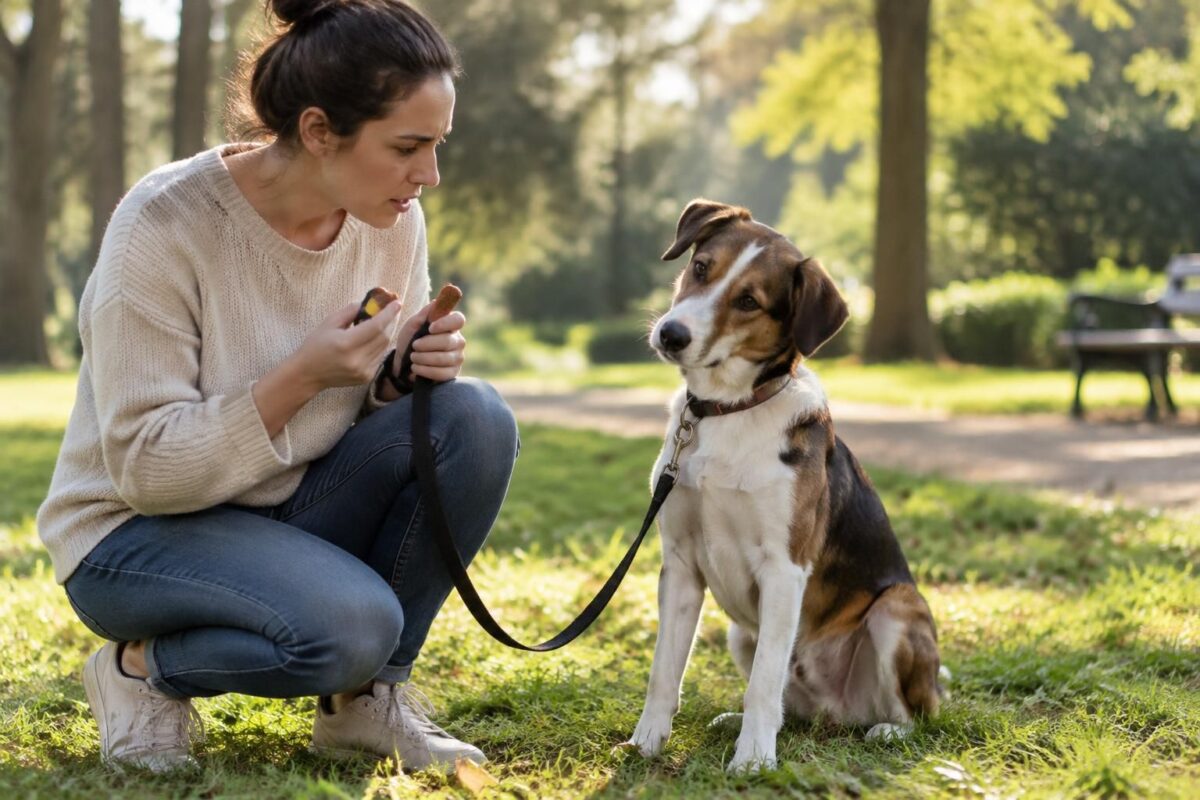
Animal training: does making the wrong choice make it harder to develop good habits?
Hi, it’s Romane. Yes: an unsuitable training choice makes it harder to establish good habits; observe the animal’s needs and choose a gentle, consistent method suited to its species. Animal training is about more than teaching commands: it relies on safety, patience, and a good understanding of animal behavior. Thoughtful adoption also helps you anticipate your companion’s needs and pace.
Do this now: five habits for suitable animal training
- Observe before acting: notice posture, signs of stress, and what triggers the behavior.
- Check the animal’s needs: sleep, activity, interaction, and a quiet space all matter for learning.
- Reward what works: a treat, a game, or a gentle word can reinforce good behavior.
- Keep the rules consistent: everyone in the household uses the same cues and words.
- Ask for advice if the behavior changes: pain or a health problem can make learning more difficult.
Do this now: compare dog training methods and learn about training mistakes caused by using an unsuitable method.
Why the choice of animal and method matters
A dog, cat, or rabbit doesn’t learn in the same way. Even within a species, temperament, age, experience, and health influence responses. Choosing an animal should therefore involve thinking about the time, space, and care you can provide.
A method based on fear can make an animal more anxious or blur the link between an action and its consequence. By contrast, simple instructions, repeated without harshness, often foster a more harmonious human-animal relationship. As a simple saying goes: “Trust is built through small gestures.”
Recognize the signals before correcting behavior
An animal that looks away, freezes, moves away, or yawns may be trying to avoid an uncomfortable situation. These signals aren’t disobedience: they’re a cue to slow down and check what’s making things difficult for the animal.
For example, if a dog barks when someone comes in, start by increasing the distance and reward calm behavior. Forcing the dog to stay close to the guest may increase its stress; it’s better to teach it gradually that it can keep a space where it feels safe.
Good habits when training becomes difficult
If a behavior appears suddenly, intensifies, or comes with physical signs, first assess the animal’s health and environment. A veterinary consultation can help rule out pain or illness before you change your training methods.
If your animal simply seems distracted, reduce distractions and work in a quiet place; if its behavior changes abruptly or it seems to be in pain, contact a veterinarian. In either case, avoid shouting and punishment: they don’t always help you understand what triggered the reaction.
A simple three-step process
- Step 1 — Observe: note the time, place, people present, and your animal’s signals. Also make sure it has a quiet place to rest.
- Step 2 — Adjust: simplify the cue, make the task easier, and reward progress, however small. Short sessions lasting a few minutes, depending on the animal and situation, are often easier to manage.
- Step 3 — Get support: if the problem persists, ask a qualified professional for advice and share your observations with the veterinarian when relevant.
One owner said their dog got worked up every time the doorbell rang. By teaching the dog to go to its mat and rewarding moments of calm, arrivals became easier to manage, without scolding.
Adapt good habits to the situation
A stable routine helps an animal anticipate mealtimes, walks, and rest. It shouldn’t be rigid: changes in location or schedule should be introduced gradually, while keeping a few familiar cues.
Responsible animal care also means recognizing your limits and protecting your companion’s well-being. A kit with gauze pads, bandages, and tick tweezers can be useful, but first-aid measures depend on the situation: in the event of a serious injury, seizures, or difficulty breathing, call a veterinarian without delay and follow their instructions.
| Situation observed | Immediate response | When to seek help |
|---|---|---|
| Suddenly refusing to be touched | Stop handling the animal and give it space. | If the change persists or seems related to pain. |
| Fear during an exercise | Increase the distance and start again with an easier task. | If the fear worsens or interferes with daily life. |
| Seizures or loss of consciousness | Move dangerous objects away, don’t restrain the animal, and don’t put anything in its mouth. | Call a veterinarian immediately. |
| Unusual behavior with signs of illness | Note the symptoms and how they change, without forcing the animal to eat or drink. | Contact a veterinarian promptly for advice on what to do. |
To see examples of cooperation and communication with a dog, a video about positive training can provide some additional guidance.
Useful questions about animal training
Does one training method work for all animals?
No. It must take into account the species, temperament, age, health, and context. If an approach increases fear or tension, go back to an easier step and ask for advice.
Should training begin as soon as the animal arrives home?
Yes, by gradually establishing simple cues: a resting space, a routine, and consistent instructions. Learning can continue at any age, with appropriate expectations.
What should I do if my animal doesn’t learn despite repetition?
Shorten the sessions, reduce distractions, and check that the reward suits your animal. If the difficulty persists or appears suddenly, consult a veterinarian or a behavior professional.
When does a situation require an urgent call to the veterinarian?
If your animal has difficulty breathing, loses consciousness, has seizures, is bleeding heavily, or deteriorates rapidly, contact a veterinarian immediately and follow their instructions.
Thanks for your interest; Romane