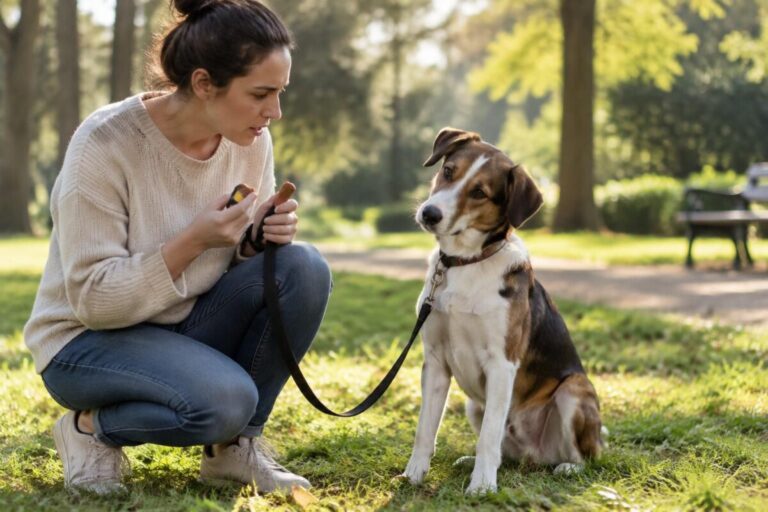

Animal behavior: is refusing the object a whim or a genuine sign of distress?
Hi, Romane here. A sudden refusal isn’t necessarily a whim: first check for pain, fear, heat, and the context, then consult a vet if the change persists or is accompanied by other signs. A dog may avoid a toy, a leash, a walk, or a cue because they feel discomfort or don’t feel safe. Observing their behavioral signals helps you understand what’s going on and protect their well-being.
What to do right away
- Stop presenting or forcing the object, and give your pet a little space.
- Watch for limping, heavy panting, trembling, licking a paw, or seeming less energetic.
- Check whether the object has a sound, smell, or texture that might worry them.
- If they refuse to go out in hot weather, test the ground with the back of your hand and choose cooler times of day.
- Make a note of when the refusal began and what was happening just beforehand.
Refusing one object may simply reflect a preference or incomplete learning, but a sudden change deserves attention. To compare with other situations, read this advice on behaviors that express discomfort and on dogs who refuse to go out.
Refusing an object: a whim, stress, or pain?
An animal may avoid an object because they associate it with an unpleasant experience. A toy that squeaks loudly, a leash put on too quickly, or an uncomfortable accessory can trigger stress or anxiety. They may also not understand what you expect of them, especially if the environment is new or noisy.
Check for a physical cause first if the refusal appears suddenly. A sensitive paw, a painful joint, or unusual fatigue can make a movement that was once easy feel difficult. In hot weather, a dog who freezes at the door may also be trying to avoid scorching ground: if the pavement is too hot for your hand, it’s too hot for their paw pads too.
“A change in behavior is information, not a fault.” This idea helps you look for what is bothering the animal rather than scolding them. A whim is rarely the most useful explanation: first consider their health, emotions, and surroundings.
Two quick examples to understand the behavior
If your dog refuses one particular toy but eats, walks, and plays normally, put it away and try again later with a familiar, quiet object. If the refusal affects several activities or is accompanied by pain, fatigue, or loss of appetite, contact a veterinarian without waiting for the situation to become established.
Once, a dog who had always been enthusiastic refused to fetch their ball and started limping after a few steps. Their person stopped the game and had their paw checked: the refusal had signaled discomfort, not stubbornness.
How to respond without reinforcing fear
Avoid repeating the request more loudly or forcing contact. If the animal turns away, freezes, or backs up, increase the distance and make the situation easier. A cue learned at home may not be understood in the same way on the street, near other animals, or amid unfamiliar smells.
Proceed in small steps and reward voluntary approaches. With an object, start by placing it at a distance, then move it closer only if the animal remains relaxed. If they refuse a walk, choose a short, quiet route rather than pulling on the leash.
Three-step approach
- Step 1: make the situation safe. Remove the object or move the animal away from heat, noise, or crowds, then check their general condition.
- Step 2: observe and note the circumstances. See whether the refusal involves just one object, a particular movement, or several activities.
- Step 3: offer a gentle retry only if the animal is comfortable. If the change persists for around 24 to 48 hours, depending on the situation, or if worrying signs appear, seek veterinary advice.
Signs that warrant veterinary advice
Limping, whining, difficulty breathing, trembling, vomiting, severe fatigue, or refusing to drink require prompt attention. In cases of significant pain, serious distress, or difficulty breathing, contact a clinic without delay. If the refusal persists without any emergency signs, a veterinarian can look for a physical cause and advise you if fear or anxiety may be involved.
| What you observe | Possible cause | Helpful response |
|---|---|---|
| Refusal of one particular object | Fear, noise, or an unpleasant texture | Remove the object and reintroduce it without pressure |
| Refusal to walk or limping | Pain, a sensitive paw pad, or fatigue | Limit exertion and seek advice if it persists |
| Refusal accompanied by panting and weakness in very hot weather | Heat discomfort or possible heatstroke | Move the animal somewhere cool and call a veterinarian promptly |
| Freezing in response to a noise or before going out | Stress or anxiety | Increase the distance and reduce stimulation |
FAQ about animals refusing an object
My dog suddenly refuses their toy: is it necessarily serious?
No. They may no longer like the toy or may be bothered by its noise or texture. If the refusal is sudden and accompanied by pain, fatigue, or a change in appetite, ask a veterinarian for advice.
Should I insist that they accept the object?
No. Forcing them can increase stress and anxiety. Give them space and offer the object from a distance, only if they remain relaxed.
When should I consult a vet if my dog refuses to go for a walk?
Consult a vet if the refusal persists, happens often, or is accompanied by limping, weakness, loss of appetite, or other unusual signs. In case of serious distress, call without delay.
Thank you for your interest; Romane