Animal habitat: built-in furniture or hidden wasted space
Hi there, it’s Romane. Built-in furniture can improve an animal’s living space if it provides a proper refuge without getting in the way of movement or rest. The right setup makes everyday life easier; the wrong one hides a loss of space behind a practical-looking facade. Before choosing, observe your companion’s habits and the space that’s actually available.
Built-in furniture for pets: space-saving or hidden space?
What to do now
- Measure the room and identify the paths your pet often takes.
- Observe where they like to sleep, hide, or eat.
- Choose a pet nook that’s accessible and suited to their size.
- Make sure the furniture is easy to clean and allows air to circulate.
- Keep a resting area clear, away from doors and noisy appliances.
To tell the difference between a welcoming bed and a spot that disrupts rest, also check out these tips on your pet’s bed and comfort and on the effects of having too many accessories.
Comparing multifunctional furniture with a dedicated space
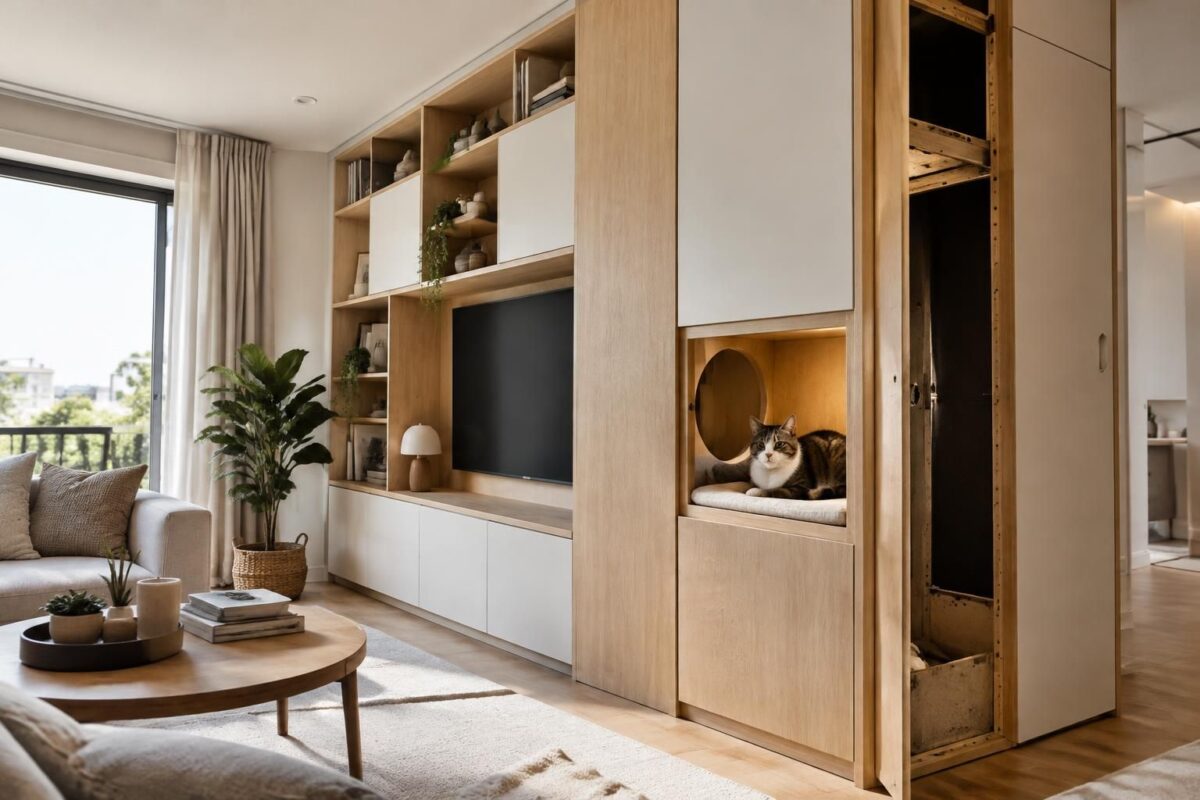
Multifunctional furniture can combine storage and a sleeping area, which is helpful in a small room. But a built-in nook is only useful if your pet can get in, get out, and settle in without being disturbed.
By contrast, a freestanding bed is easy to move and lets you choose where to place it. However, it may take up more floor space. So the right choice depends less on appearance than on your companion’s habits.
| Option | Advantage | What to watch for |
|---|---|---|
| Furniture with a nook | Combines a bed and storage | Access, ventilation, and cleaning |
| Freestanding bed | Easy to move | Floor space taken up |
| Designated spot without furniture | Easy to adapt | Risk of being in a passageway |
For example, if your cat often rests under a console table, an open nook can recreate that refuge while providing storage. If your dog prefers to stretch out near the family, a separate bed placed out of the way will often be a better fit.
Avoiding hidden space loss in your interior setup
The trap is to count only the floor area taken up by the furniture. A nook that’s too deep, a door that blocks access, or a bed placed in a hallway can make part of the room unusable.
A discreet living space shouldn’t become a forgotten one. If your pet hesitates to go in, avoids the furniture, or comes straight back out, it may be poorly placed, too narrow, or exposed to foot traffic. Their behavior is a valuable indicator of their comfort.
Three steps to check your choice
- Measure and observe. Identify paths, resting areas, and the space needed to open doors or drawers.
- Test the location. First set up the bed without securing the furniture, then let your pet discover the spot at their own pace.
- Reassess after a few days. Check that your pet uses the nook, that it stays clean, and that the space remains easy to move through.
This simple check helps balance space optimization with animal welfare. A successful setup isn’t just compact: it should be comfortable for everyone in the household.
Frequently asked questions about built-in furniture for pets
Is built-in furniture suitable for all pets?
No. It should suit the animal’s size, habits, and mobility. An open or freestanding bed may be a better fit for some pets.
How can I tell if the nook is big enough?
Your pet should be able to get in, turn around, and settle into their resting position without feeling cramped. Observe them in their bed rather than relying only on the furniture’s exterior dimensions.
Where should I place furniture with a pet nook?
Choose a quiet, accessible spot away from drafts, doors, and busy walkways. Avoid isolating your pet completely if they like to stay near the family.
Does multifunctional furniture always save space?
Not necessarily. It can reduce visible clutter, but become inconvenient if its doors block movement or its nook goes unused. Check how it’s actually used and how much space there is around the furniture.
Take good care of your companion and share your observations in the comments. — Romane