
Pet Accessories: 7 Mistakes to Avoid Before Placing an Order
Hi, it’s Romane. To avoid buying the wrong things, choose each accessory according to your pet’s build, age, and reactions. A successful accessory purchase isn’t about fashion: above all, it should protect your pet’s comfort and safety.
Before checking out, take the time to observe your companion and check the product’s features. Here are seven common pitfalls and simple ways to avoid them.
Do this now: 5 checks before you order
- Check whether the accessory is genuinely useful in everyday life.
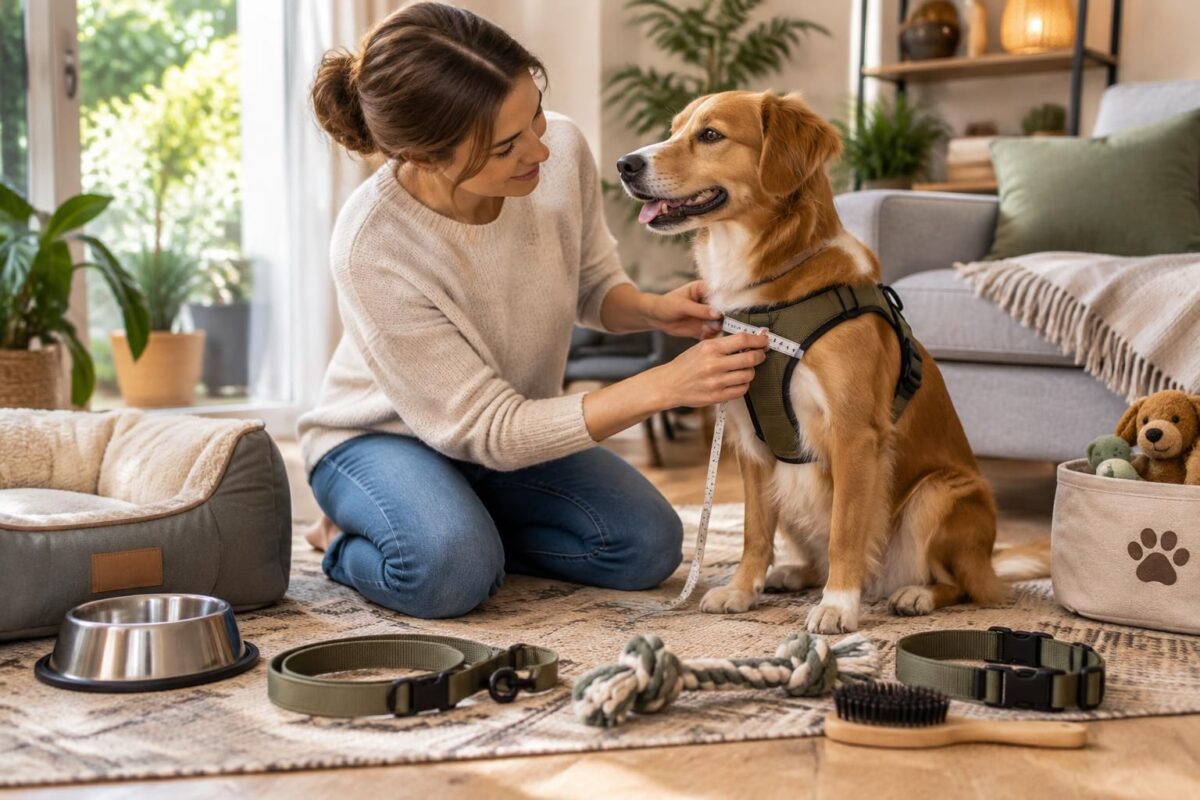
- Measure your pet to choose the right size.
- Choose durable materials that are sturdy and easy to care for.
- Look out for noisy, heavy, or bulky features that could bother your pet.
- Be prepared to remove the item if it causes agitation, withdrawal, or repeated attempts to get rid of it.
Attractive photos aren’t enough to judge an item: look at its function and design, too. To consider whether a product is genuinely useful, read this guide on how to buy useful items instead of wasting money, along with these tips on how to choose fewer accessories, but choose better.
7 shopping mistakes that can affect your pet’s comfort
A common mistake is choosing based on appearance first, only to discover that the item interferes with your pet’s movement or senses. A collar that makes too much noise, a heavy harness, or a tight garment can cause discomfort and sometimes make your pet refuse to wear it.
- Choosing based only on style: a decorative accessory isn’t necessarily practical or suitable.
- Ignoring measurements: the wrong size can cause chafing, discomfort, or a risk of escape.
- Forgetting about age and health: a young pet, an older companion, or a pet with sensitive skin won’t have the same needs.
- Choosing an irritating or poorly breathable material: check the seams, contact areas, and care instructions.
- Using too many accessories: too many items can restrict movement and overwhelm your pet’s senses.
- Ignoring noise and weight: some pets react badly to bells, parts that clatter, or bulky items.
- Ordering without checking the quality: read customer reviews carefully and compare prices for products with equivalent features.
For example, a dog that freezes as soon as it’s wearing its harness isn’t necessarily being stubborn. The model may be too heavy, too tight, or poorly positioned: it’s better to take it off, check the fit, and try another option without forcing your dog.
Compare accessories based on their use, not just their price
Comparing prices is useful when you also consider durability, materials, dimensions, and care instructions. A cheaper but flimsy item may need replacing quickly, while a well-designed product can last longer—as long as it’s suitable for your pet.
| Accessory | Risk of a poor choice | What to check before buying |
|---|---|---|
| Collar | Chafing, discomfort, or escape if it doesn’t fit properly | Measurements, adjustability, and clasp strength |
| Harness | Discomfort or restricted movement | Freedom of movement around the shoulders and no chafing |
| Toy | Distress if it’s too noisy, or swallowing pieces if it breaks down | Size, material, condition, and ease of cleaning |
| Clothing | Agitation or restricted movement | Room to move, breathability, and how long it needs to be worn |
| Bedding | Uncomfortable rest if it’s too small or unsuitable | Dimensions, support, and care requirements |
For your pet’s safety, also check the seams, clips, and fastenings when the item arrives, and then regularly during use. An accessory that’s damaged or difficult to clean should be repaired or replaced before it becomes a hazard.
A gentle test to spot discomfort
An unusual reaction is a sign to take seriously: your pet may scratch, pull away, freeze, or try to remove the item. For a puppy or kitten, an unpleasant experience can make future attempts more difficult; for an older pet, physical discomfort may be more pronounced.
Proceed in three steps: 1. Assess your pet’s needs, age, health, and temperament. 2. Test the accessory briefly, during a calm moment, without forcing your pet. 3. Adjust the fit or remove it at the first signs of discomfort; if these persist, ask a veterinarian for advice.
For a walking accessory, the right choice lets your pet move freely while allowing you to keep them safe. If your pet becomes agitated or refuses to move forward, stop the test and reassess the model rather than insisting.
Frequently asked questions about ordering pet accessories
How can I tell if an accessory is the right size?
Follow the measurements provided by the manufacturer and check the fit on your pet. It should neither squeeze nor slip, and your pet should be able to move freely.
What signs show that an accessory is bothering my pet?
Agitation, pulling away, scratching, freezing, or repeated attempts to remove the item may indicate discomfort. Take it off and check the fit.
Are customer reviews enough to help me choose?
They can help identify recurring problems, but they don’t replace checking the dimensions, materials, and your pet’s individual needs.
What should I do if my pet refuses a new accessory?
Don’t force your pet. Remove the item, check that it isn’t heavy or poorly fitted, then try again later if appropriate or choose another option.
Thanks for reading! Feel free to share your observations in the comments. — Romane