Animal health: an unsuitable food bowl, an underestimated mistake
Hi, it’s Romane. A suitable bowl takes your pet’s size, posture and habits into account, but a balanced diet is just as important for their health.
A bowl that is too deep, unstable or difficult to clean can make your pet less comfortable and make mealtimes more difficult. And if you cook for your dog, the shape of the bowl can never replace a diet formulated with a professional.
Good habits to adopt
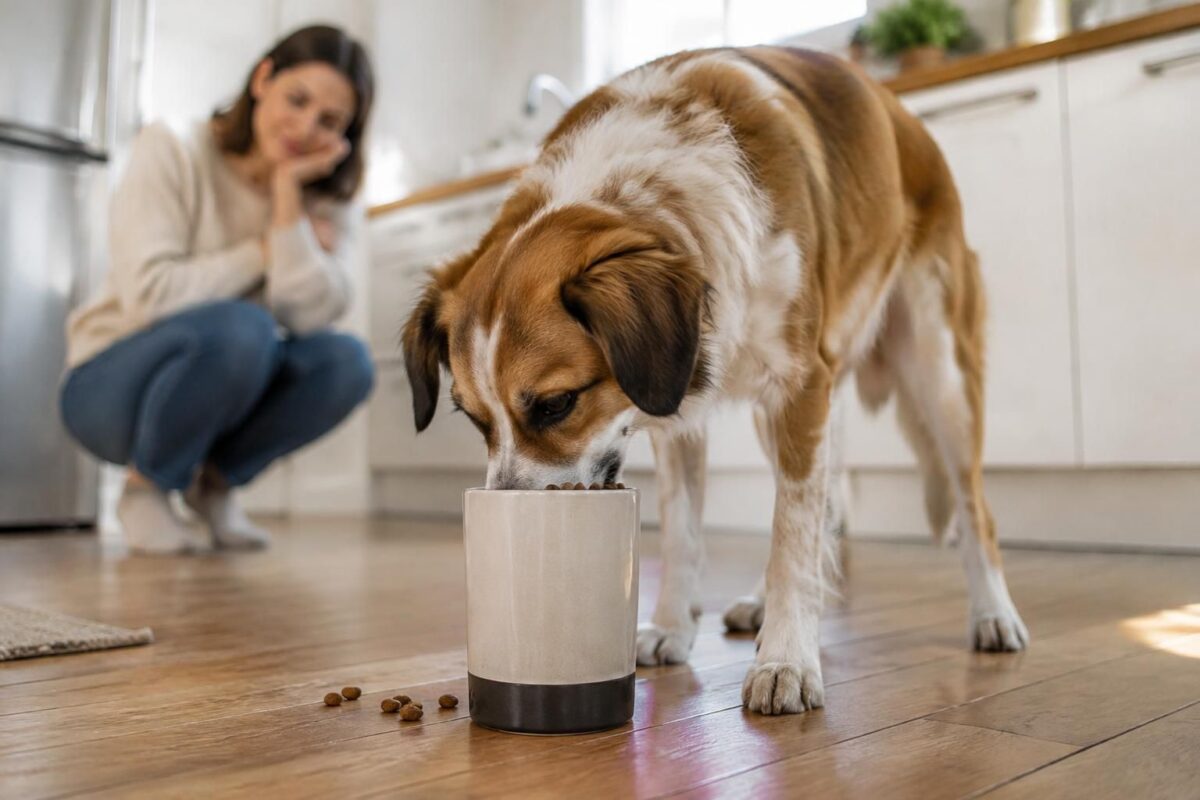
- Observe your pet’s eating posture: they should be able to eat without twisting awkwardly or bumping their muzzle against the sides.
- Check the bowl’s size: your pet should be able to reach the food easily without the bowl being excessively large.
- Choose an easy-to-clean material, such as stainless steel or undamaged ceramic, and wash the bowl regularly.
- Stabilize the bowl if it slides or makes noise, as these issues can cause stress at mealtimes.
- Have your homemade diet checked by a veterinarian, particularly to choose a suitable mineral and vitamin supplement.
An unsuitable bowl can make mealtimes uncomfortable, but digestive problems or deficiencies are not automatically caused by the bowl: the composition and quantity of food are also key factors. To review mealtime habits, you can read this advice on choosing a bowl that supports digestion and on bowl height and your pet’s comfort.
An unsuitable bowl: distinguishing discomfort from a dietary problem
A bowl that is too narrow can be uncomfortable for a dog with a broad muzzle. A lightweight bowl that moves with every bite can also distract them. These signs may be a reason to change the bowl or its location, but on their own they are not proof of a health problem.
Joint pain, for example, can make certain movements difficult. If your pet hesitates to bend down, changes position or seems to be in pain, ask a veterinarian for advice before raising their bowl: the appropriate height depends on their individual situation.
A homemade diet requires calculation, not a one-size-fits-all rule
Meat alone, or served mostly with rice, does not necessarily meet a dog’s needs. Over time, an unbalanced diet can lead to mineral or vitamin deficiencies, while too much food or an improper balance of ingredients can contribute to weight gain or digestive problems.
There is no single proportion that suits every dog. Age, weight, activity level, neuter status and health should all guide the calculation. The mineral and vitamin supplement should be chosen according to the recipe and the animal’s needs, with help from a veterinarian.
| What you observe | Possible cause | Helpful step |
|---|---|---|
| The bowl slides or tips over | Bowl is too lightweight or has an unstable base | Choose a stable, easy-to-clean model |
| The dog bumps their muzzle against the sides | Shape or size is unsuitable | Try a wider or shallower bowl |
| Fatigue, a dull coat or weight loss | Various causes, including an unbalanced diet | Make an appointment for an examination and dietary assessment |
| Food is eaten very quickly | Habit, excitement or competition over food | Ask for advice before using a slow-feeding device |
Choosing the right material and maintaining hygiene
The bowl’s material matters mainly in terms of stability, cleaning and your pet’s tolerance. Stainless steel and undamaged ceramic are easy to clean; however, check that the ceramic has no cracks or chips. Whatever the model, regular washing helps prevent dirt from building up.
Changing the bowl may help a pet who seems uncomfortable, but it won’t treat an illness. If your companion suddenly refuses to eat, drools more than usual or shows signs of pain, seeking veterinary advice should take priority over buying a new accessory.
A simple three-step check
- Observe a full meal. Note whether the bowl moves, whether your pet adopts a stiff posture or regularly leaves food they can’t reach.
- Adjust the bowl and its location. Choose a size that lets your pet eat comfortably, a stable surface and a quiet spot.
- Have the diet and any unusual signs assessed. If you prepare homemade meals, take the recipe to your veterinarian so it can be adjusted for your dog.
This approach helps you avoid confusing simple discomfort with a dietary problem. It also makes it possible to act early if mealtimes are accompanied by pain, reduced appetite or a change in general condition.
Frequently asked questions about dog bowls
How can I tell if the bowl is the right size?
Your dog should be able to reach their food without bumping the sides or adopting an uncomfortable posture. Observe them while they eat and choose a shape that suits their muzzle.
Can an unsuitable bowl cause deficiencies?
The bowl itself does not cause nutritional deficiencies. Deficiencies are more likely to be linked to an unbalanced diet, particularly homemade meals that have not been properly formulated.
What material should I choose for the bowl?
Stainless steel and undamaged ceramic are easy-to-clean options. Choose a stable bowl with no cracks or damaged edges, and wash it regularly.
Should I raise my dog’s bowl?
Not necessarily. The right height depends on the animal and their health. If they are stiff or in pain, ask a veterinarian for advice.
Thanks for reading! Feel free to share your observations in the comments. — Romane