
Pet Accessories: How to Buy Less but Choose Better
Hello, this is Romane.
To buy less but better, start with your pet’s actual needs and choose accessories that are safe, repairable, washable, and suited to their body shape.
Making a responsible purchase doesn’t mean always choosing the most expensive or trendiest product. It means investing in lasting quality and animal well-being while limiting the number of items that end up unused at the back of a cupboard.
Good habits to adopt
- Observe your companion: take note of their habits, age, size, and any health issues they may have.
- Take inventory: before buying anything new, check what is still safe, functional, and easy to maintain.
- Measure before ordering: take the relevant measurements for a bed, harness, or carrier.
- Read the product description: look for information about materials, washing instructions, replaceable parts, and safety.
- Compare the cost over time: a repairable product that lasts can offer better value for money than a cheap model that needs frequent replacing.
To fine-tune your thoughtful choices, you can also read this advice on the real usefulness of accessories and on which items to keep without overequipping yourself.
Pet accessories: start with needs, not trends
A useful accessory addresses a specific situation: a bed that eases discomfort for an older dog, a carrier that makes journeys safer, or a toy that stimulates an indoor cat. Before buying, ask yourself whether your pet will really use the item and whether you can offer a simple solution with what you already have.
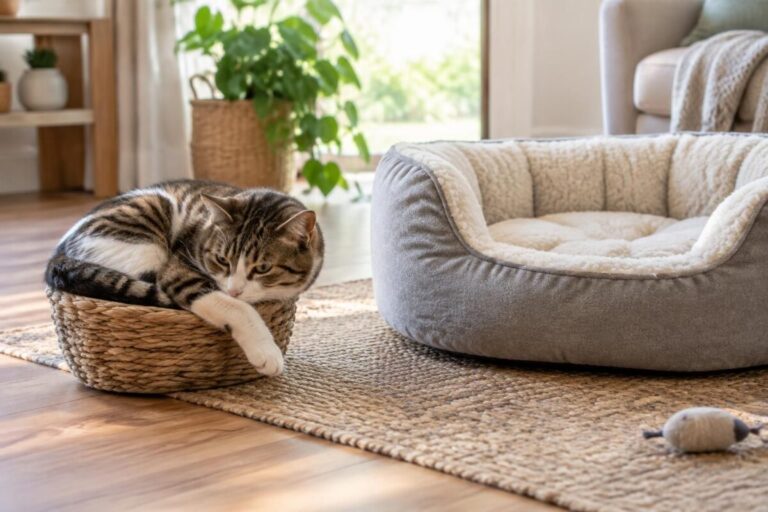
Imagine Nala, a cat who prefers sleeping in a cardboard box rather than a new bed. Her behavior suggests that she prefers enclosed spaces; buying a second open cushion probably wouldn’t meet her needs. Observing your pet helps avoid unnecessary spending and encourages mindful consumption.
Choose a bed suited to your pet’s body shape
A bed should allow your pet to rest in a natural position. A dog should be able to stretch out without feeling cramped, while some cats prefer a hiding place or a bed with reassuringly high sides. For an older dog or one prone to stiffness, a stable, sufficiently thick mattress that is easy to get onto may be more suitable than a high-sided or very soft bed.
Choose a removable, washable cover and protected filling. A blanket you already have at home can supplement the bed, as long as it isn’t fraying and doesn’t have buttons or small parts your pet could swallow.
Compare materials and safety before buying
Material matters, but it isn’t enough on its own to guarantee a good product. Durable materials, strong stitching, and reliable fasteners are essential for a harness or leash; a food bowl should be stable and easy to clean thoroughly.
Labels can provide insight into certain criteria: OEKO-TEX Standard 100 covers tested substances in finished textiles, GOTS sets standards for certain organic fibers, and GRS provides information about recycled content and its traceability. No label replaces checking the size, finish, and intended use.
| Accessory | What to look for | What to check |
|---|---|---|
| Food bowl | Food-grade stainless steel or ceramic suitable for food contact | Stability and no cracks or chips |
| Bed | Removable cover and protected filling | Size, support, and ease of washing |
| Harness and leash | Suitable fit and sturdy components | Freedom of movement, stitching, and clasp |
| Toy | Suitable size and material designed for this use | No detachable parts or accessible pieces |
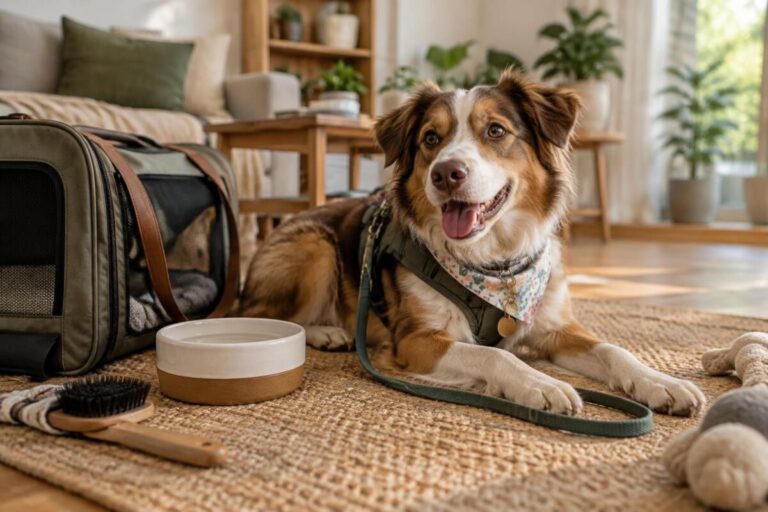
| Carrier | Stable structure, sturdy door, and sufficient ventilation | Condition of the base, hinges, and locking mechanism |
Repair and maintain items to reduce waste
A torn seam or a replaceable buckle doesn’t always mean the whole accessory has to be thrown away. Before discarding it, check whether it can be repaired and whether the manufacturer offers replacement parts. On the other hand, immediately remove any toy that is shedding pieces or any leash with damaged stitching.
Wash a bed according to the manufacturer’s instructions, often at 30 or 40 °C. Food bowls should be cleaned regularly, and walking accessories inspected before heading out: maintenance contributes to safety as well as longevity.
Three steps to making a responsible purchase
- Define the need: note the problem you’ve observed and the outcome you want. For example, if your dog slips when getting up, a stable bed may be more useful than a new toy.
- Check the fit and construction: measure your pet, examine the materials, and choose items that are repairable or washable.
- Observe your pet after buying: introduce the accessory gradually and see whether your companion uses it without discomfort, rubbing, or signs of distress.
If your pet avoids their new bed, freezes in their coat, or scratches after putting on a collar, don’t force them to get used to it. Remove the item, check the fit, and ask a veterinarian for advice if the discomfort persists.
Frequently asked questions about choosing pet accessories
Should you always buy eco-friendly accessories?
The most important thing is that the item is safe, suitable, and actually used. Recycled material doesn’t make up for an ill-fitting or fragile accessory; also check how it should be cared for and how long it will last.
Can you buy second-hand accessories?
Yes, for some washable items that are easy to inspect, such as a stainless steel food bowl or an intact carrier that can be disinfected. For a harness, collar, or leash with an unknown history, choose reliable equipment whose condition you can check.
How can you choose a toy without accumulating too many?
Start with two or three toys suited to your pet’s preferences, then rotate them. Remove any item that is torn, crumbly, or has small detachable parts.
Thanks for reading! Feel free to share your observations in the comments. — Romane