Animal health: a tight harness causes immediate discomfort
Hi, it’s Romane.
A harness that’s too tight can bother your dog from the very first steps: loosen it or take it off, then check your dog’s skin, breathing, and freedom of movement.
A properly fitted piece of equipment distributes pressure without compressing the body. If your companion slows down, scratches, or refuses to move forward, take these signs seriously: your pet’s discomfort should be checked right away.
What to do right away
- Loosen the straps if they leave marks on the skin or compress the chest.
- Take off the harness if your dog seems to have trouble breathing or walking.
- Check the skin under the straps: look for redness, skin irritation, or chafing.
- Observe your dog’s gait and make sure they can walk, turn, and sit without restricted movement.
- Ask a veterinarian for advice if the discomfort persists, a wound appears, or breathing remains abnormal.
A correctly adjusted harness should stay in place without compressing. To review what to check before heading out, see this guide on adjusting your dog’s harness before a walk and these tips on the risks a harness that’s too tight poses to breathing.
Why a tight harness causes immediate discomfort
When a strap compresses the chest or sits close to the armpit, each step can increase pressure on the body and cause chafing. Your dog may then slow down, scratch, pull differently, or try to get out of their gear.
A well-chosen harness can reduce pulling on the neck, but it isn’t automatically comfortable. The wrong size or a poorly positioned model can make breathing difficult, limit range of motion, and cause stress during walks.
Signs to watch out for
Observe your dog before, during, and after the walk. Discomfort may show up as a stiff gait, repeated stops, flattened ears, or sudden reluctance to put on the harness.
- Red marks or a sore area under a strap.
- Unusual panting or visibly difficult breathing.
- Hesitation to run, jump, or turn as usual.
- Frequent scratching or refusing to move forward when wearing the harness.
A single sign may not always reveal the cause, but if it keeps happening, it’s worth checking. If your dog seems to be in pain or is having trouble breathing, take off the harness and contact a veterinarian.
Properly fitted harness: simple things to check
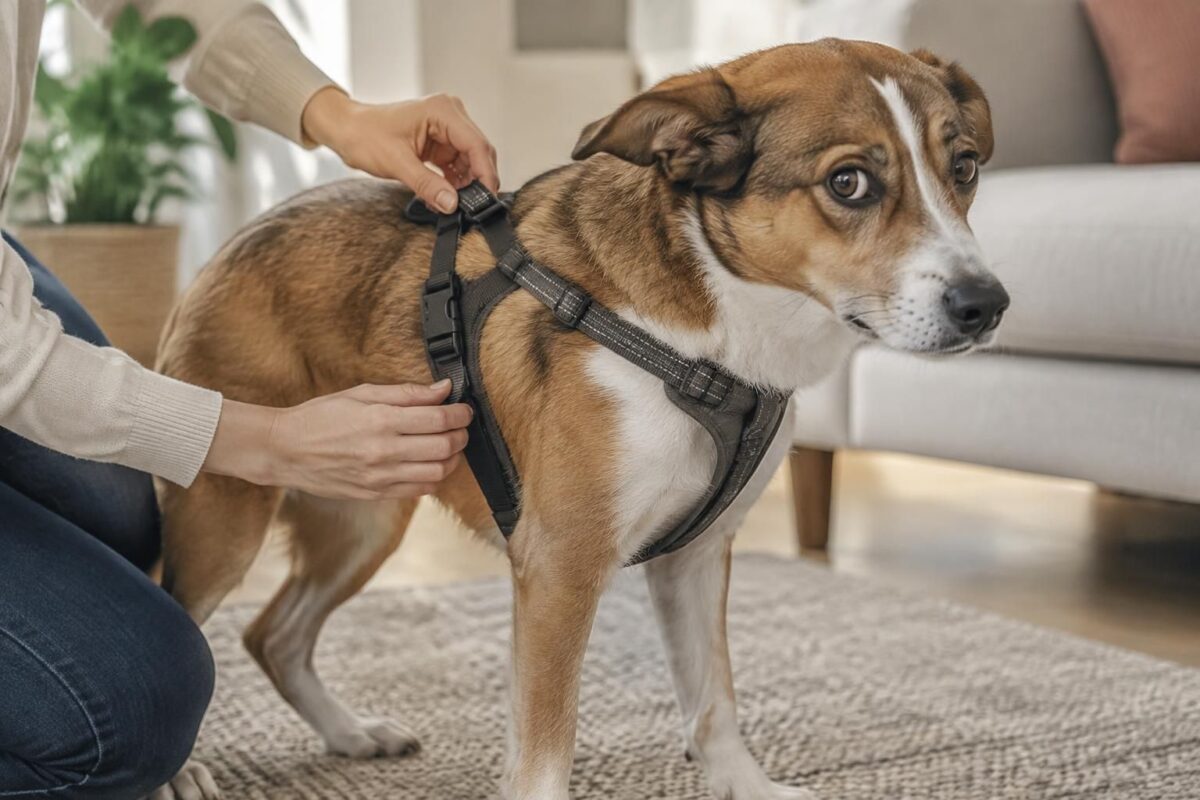
The right fit depends on your dog’s build and the harness model. As a general rule, you should be able to fit about two fingers between the straps and your dog’s body, without the harness twisting or your dog being able to slip out of it.
| What to check | What the fit should be | Warning sign |
|---|---|---|
| Chest circumference | Snug, with a little room under the straps | The strap compresses or leaves a mark |
| Strap position | Away from the armpits and sensitive areas | Repeated chafing or red skin |
| Freedom of movement | Natural walking and turning | Restricted movement or a stiff gait |
| Condition of the equipment | Buckles and stitching intact | Worn strap, weakened buckle, or rough edge |
Check the fit while your dog is standing and relaxed, then while they’re moving. A fit that seems fine when standing still may become uncomfortable when the shoulders move forward or the chest expands.
3 steps to correct the fit
- Take off the harness and check the skin. Check the areas under the straps and let your dog relax for a few minutes. If there’s a wound, pain, or persistent difficulty breathing, consult a veterinarian.
- Put the harness back on and adjust it gradually. Position the harness according to the manufacturer’s instructions, then adjust each strap without tightening it to the point of compression. Check the clearance and make sure the shoulders can move freely.
- Try it out for a short time. Let your dog walk for a few minutes in a quiet place. If they move naturally and show no signs of discomfort, the fit seems better; otherwise, stop and try a different adjustment or another model.
For example, if a dog keeps scratching under the same strap after a few minutes, the problem won’t be solved by simply making them walk more. Check the area, move the strap if the model allows it, or choose a harness whose shape is better suited to your dog’s build.
When to choose a different model
If the harness remains uncomfortable despite several adjustments, its size or shape may not be right. Dogs have different chests, shoulders, and proportions: animal well-being depends on equipment that suits the individual, not just their weight.
Also take off the harness after a walk, especially if it’s wet or your dog’s skin is sensitive. Regularly checking the stitching, buckles, and contact areas helps you spot wear before it causes skin irritation.
Helpful answers about tight harnesses
How can I tell if the harness is too tight?
Check whether the straps leave marks on the skin, rub under the armpits, or restrict movement. You should be able to fit about two fingers between the harness and the body, without the equipment moving excessively.
What should I do if my dog has trouble breathing in their harness?
Take off the harness immediately and let your dog rest somewhere quiet. If their breathing remains difficult, gets worse, or is accompanied by weakness, contact a veterinarian promptly.
Can my dog wear their harness all day?
It’s best to take it off when it isn’t needed, especially at home. This limits chafing, moisture, and prolonged pressure points.
Can a properly fitted harness still irritate the skin?
Yes, especially if the material is rough or damp, or if your dog wears it for a long time. Regularly check the contact areas and choose a model suited to your dog’s skin and build.
Thanks for reading! Feel free to share your observations in the comments. — Romane