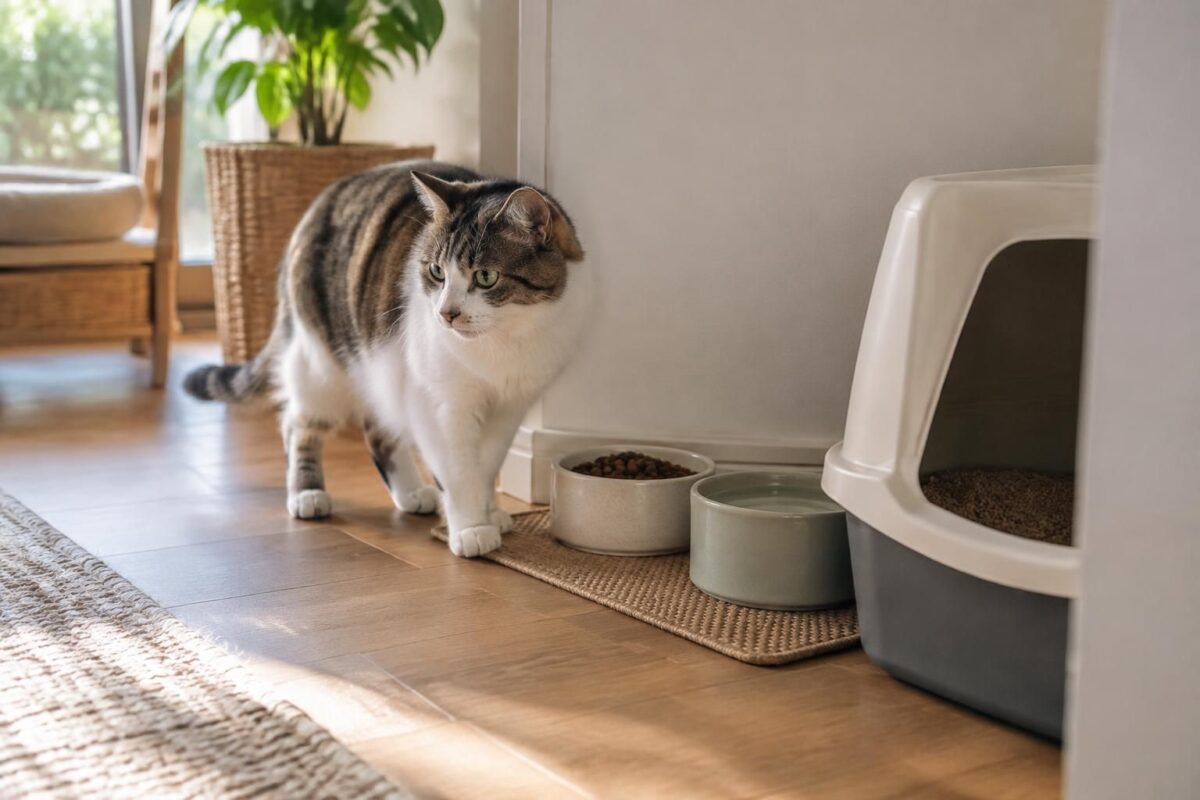
Animal’s habitat: a dining area that’s too close poses a problem
Hi, Romane here. Separate the feeding area from resting, walking-through, and toileting areas to reduce discomfort and the risk of contamination. In an animal’s habitat, even a few steps can create a safe distance, depending on the species and the size of the home. Also observe whether your companion eats less, becomes restless, or avoids their bowl. A sudden change deserves attention, but it doesn’t necessarily indicate a serious problem.
What to do right away
Move the bowl away from the litter box, waste, and noisy areas, then check whether your animal settles down. For more tips on setting up the space, you can also read these tips on common mistakes around your cat’s feeding area and on the importance of a quiet spot.
- Keep food away from the toilet area, trash can, and household cleaning products.
- Choose a stable, quiet, and easily accessible spot.
- Wash the bowls regularly and remove leftovers that attract insects.
- Keep water available, but don’t place it in the middle of a busy walkway.
- Observe your animal’s appetite and behavior after the change.
Feeding area too close: why it may bother your animal
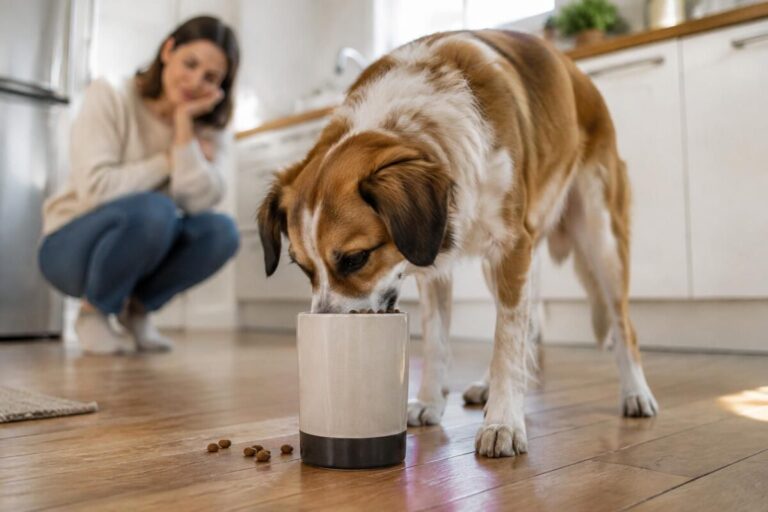
A bowl placed near the litter box, in a high-traffic area, or near a source of noise can make mealtimes unpleasant. Food odors mixed with waste also undermine hygiene and can encourage contamination of the bowls.
Being close to another animal can also create tension. Even without a fight, a companion that watches or blocks access can sometimes cause animal stress and prompt the other to eat quickly or avoid their food.
Adjusting the distance to suit the species and home
There is no single distance that works for all animals. In practice, separate the areas as much as your home allows, and above all make sure the feeding area is away from the toilet area, sleeping area, and busy spots.
For a cat, in particular, avoid placing the food right next to the litter box. For a dog, a feeding area in a walkway may force them to eat amid people coming and going. The best setup is one that offers calm, easy access without pressure or competition.
Spotting signs of discomfort around the bowl
An animal that feels uncomfortable may hesitate before eating, move their food, stop frequently, or wait until the room is empty. These signs are more meaningful if they appear after the bowl is moved, a new animal arrives, or the routine changes.
If noise or foot traffic is the problem, try a more secluded spot and observe your animal’s response for a few days. If your companion seems to be in pain, refuses several meals, or shows other unusual signs, contact a veterinarian.
Two situations to distinguish
If your cat sniffs the food and then walks away when someone passes by, try a quieter spot. If your dog eats less and seems uncomfortable even in a quiet place, ask a veterinarian for advice.
During a consultation, an older dog had started eating near the door instead of in their usual spot. Moving the bowl helped reveal that the dog was avoiding walking because of joint pain.
| What you observe | Possible cause | What to try |
|---|---|---|
| The animal leaves their bowl as soon as there is movement | Too much foot traffic or activity | Set up the feeding area in a less busy spot |
| They sniff the food and then refuse to eat | Unpleasant odor, dirty bowl, or stress | Clean the bowl and check its location |
| They guard their food or eat very quickly | Competition with another animal | Set up separate feeding areas |
| They eat less despite having a quiet spot | Possible discomfort or health problem | Monitor their condition and ask a veterinarian for advice |
Reorganize the feeding area in three steps
- Step 1: identify sources of discomfort. Observe the noise, foot traffic, odors, and interactions with other animals at mealtimes.
- Step 2: move the bowl gradually. Choose a stable, clean, and easily accessible spot. If your animal hesitates, move it in small increments rather than changing everything at once.
- Step 3: check that the new location suits them. Monitor their appetite and behavior. If their discomfort persists or worsens, consult a professional.
“A peaceful meal begins with a space where an animal feels safe.” A consistent routine and familiar cues support animal well-being every day.
Habits that protect hygiene and keep things calm
Keep the bowls clean and store food in a sealed container. If several animals live together, set up separate feeding spots so each can eat at their own pace, without rivalry or constant monitoring.
Also avoid moving the bowls frequently. If you need to reorganize the room, keep familiar cues in place as much as possible and give your companion time to explore their new space.
How far should the feeding area be from the litter box?
There is no universal measurement. Move the two areas as far apart as possible and avoid placing food right next to the toilet area.
My animal is eating less after I moved their bowl: what should I do?
Temporarily put the bowl back in a quiet spot and observe their behavior. If the reduced appetite persists or is accompanied by other signs, contact a veterinarian.
Can two animals share the same feeding area?
They can eat in the same room if each has quiet access. Separate bowls and a little space often help reduce competition.
Thank you for your interest; Romane