Animal training: 3 items that help without confusing the cues
Hi, it’s Romane.
To help your puppy without confusing them, focus on three simple items: a shared toy, a rest mat, and a treat pouch.
How effective they are depends above all on how you use them. Predictable routines support animal training and make communication with your pet easier.
What to do right now
- Choose a toy reserved for playtime with you.
- Set up a mat in a quiet spot that isn’t isolated.
- Keep a few treats in an easy-to-open pouch.
- Associate each item with one simple, consistent purpose.
- Observe your puppy and adjust the length of the exercises to their attention span.
Good training equipment is no substitute for your presence or consistent cues: it helps make them clearer. To learn more, check out these tips on creating a lasting point of reference and setting boundaries between rest and play.
Three useful items for clear animal training
When a puppy arrives, it’s tempting to accumulate lots of accessories. However, having too many items available all the time can make their purpose less clear. It’s better to offer just a few items, each with a regular, easy-to-understand use.
1. An interactive toy to strengthen your bond
Choose a toy that you hold and use together: a soft tug toy, a ball on a rope, or a toy suited to your puppy’s size. A few minutes of active play is often enough to create an enjoyable moment and encourage your puppy to come back to you.
Put it away after the session rather than leaving it out all day. That way, it becomes a clear cue: this toy means shared play, not solo entertainment. Check its condition regularly and remove any damaged or detachable parts.
2. A mat to make rest predictable
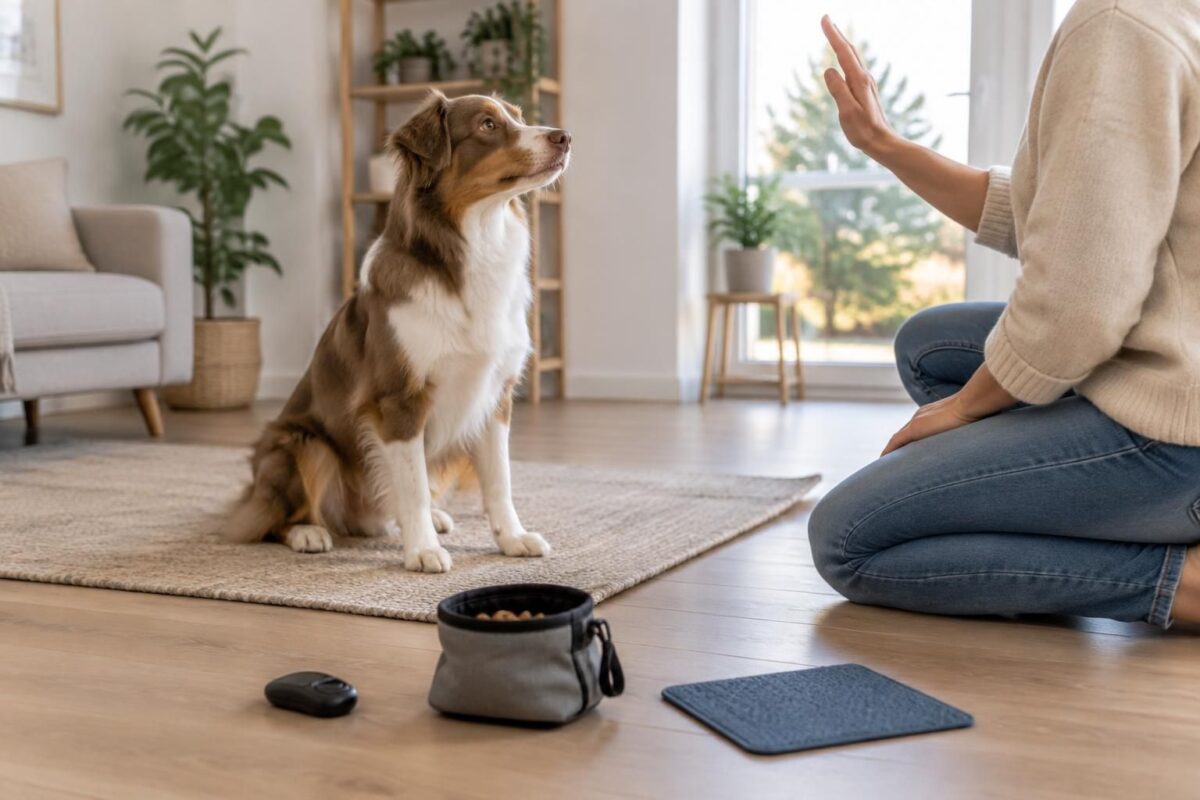
A washable mat can become a cue for calm. Place it in a corner where your puppy can observe what’s happening at home without being in the middle of the traffic. Invite them to settle on it after a walk or playtime, without making them stay there.
For example, if visitors arrive, you can place a treat on the mat and praise your puppy when they settle on it. This creates a positive association with the spot: it signals a break, not being sent away.
3. A treat pouch for rewarding at the right moment
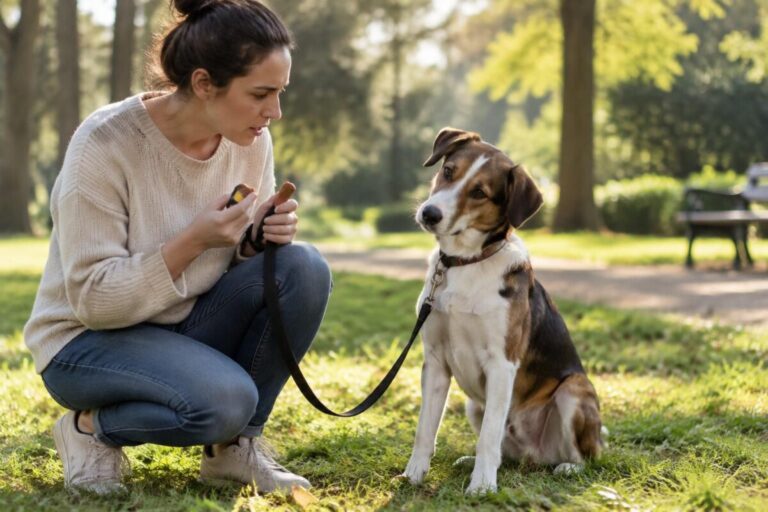
An easily accessible pouch lets you reward a behavior as soon as it happens: coming back to you, putting their paws on the mat, or staying calm for a few seconds. Very short sessions, sometimes just one or two minutes, are often better suited to a young puppy than a long exercise.
A clicker can also mark the desired behavior precisely, as long as the sound has first been associated with a reward. It’s optional: a brief, consistent word works too. A training target can help guide a movement, but it’s only useful if its role remains distinct from that of the mat and toy.
Clear cues instead of an accessory for every exercise
Positive reinforcement means making a behavior worthwhile for the animal by providing a pleasant consequence. The reward might be a treat, a game, or access to an enjoyable activity: it doesn’t always have to be the same.
To avoid confusion, associate each item with one consistent purpose. The mat invites rest, the toy signals interaction, and the pouch is for rewards. This consistency supports animal learning without turning everyday life into a series of commands.
| Item | What it signals | Keep in mind |
|---|---|---|
| Interactive toy | Play is shared with you | Use it under supervision and put it away afterward |
| Mat | A place to settle | Let the puppy go there without forcing them |
| Treat pouch | A reward comes at the right moment | Give small portions that suit their diet |
A simple three-step approach
- Introduce one item at a time. Let your puppy observe and explore it at their own pace in a calm environment.
- Associate it with an easy action. Reward them for coming back to you, settling on the mat for a few moments, or turning their attention to you.
- Repeat in familiar situations. Once your puppy understands the cue at home, you can use it elsewhere, reducing distractions at first.
If your puppy gets restless or turns away, simplify the exercise and take a break. An item should never be used to mask fear or force an uncomfortable situation: observe their reactions and respect their need for space.
Practical questions about puppy training items
Should you leave the interactive toy out?
It’s generally clearer to reserve it for shared playtime and then put it away. However, make sure your puppy has safe activities suited to their needs when they’re alone.
Is a clicker essential for training a puppy?
No. It can mark a behavior precisely, but a short, consistent word can also serve as a cue. The key is for your puppy to understand what signals that a reward is coming.
At what age can you start using a mat?
You can introduce one as soon as your puppy arrives, without expecting them to stay on it for long. Reward them when they settle on it by themselves, and gradually increase the time.
What reward should you choose during training?
Use small treats that suit their diet, their favorite toy, or an activity they enjoy. Notice what motivates them and adjust to the situation.
Thanks for reading! Feel free to share your observations in the comments. — Romane