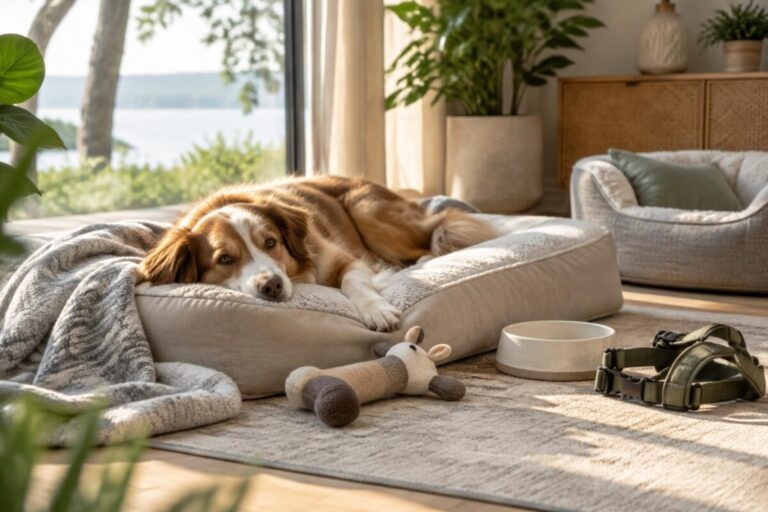

Pet Accessories: 5 Useful Purchases for Day One
Hi, it’s Romane. The five useful things to buy from day one are food and water bowls, a bed, walking gear, a carrier, and suitable toys, along with a brush for routine grooming. Prepare a calm, safe space before your pet arrives, without trying to buy every accessory on offer. The right choices depend mainly on your pet’s age, size, and habits. The goal is simple: give them a sense of security and meet their essential needs.
Things to do right away
- Set up two stable bowls, one for water and the other for food.
- Prepare a comfortable bed in a quiet corner, away from busy areas.
- Choose a well-fitting leash, collar or harness, with an ID tag.
- Get a carrier or another suitable restraint for car journeys.
- Buy a sturdy toy, a brush suited to their coat, and waste bags.
Do this now: check the size of the accessories and keep things simple for the first few days. To compare the essentials, also see this list of dog accessories and these tips for welcoming a puppy.
5 useful things to buy to welcome your pet
The first few hours are often full of new discoveries. A few carefully chosen items are enough to make your home feel more reassuring and everyday tasks easier.
| Useful item | What it’s for | How to choose |
|---|---|---|
| Food and water bowls | Serve food and keep water accessible. | Choose a stable, washable model that’s suitable for your pet’s size. |
| Bed | Provide a comfortable place to rest. | Choose a size that allows your pet to stretch out. |
| Walking gear | Go out safely and make identification easier. | Pair a leash with a collar or harness, and add an ID tag. |
| Carrier | Keep your pet safe during journeys and vet visits. | Make sure your pet can stand up and turn around inside it. |
| Toys and brush | Encourage play and gently introduce grooming. | Choose toys suited to your pet’s size and a brush suited to their coat. |
Food and water bowls and a bed: two familiar comforts from the start
Easy-to-clean bowls make mealtimes simpler. Stainless steel is often practical and durable; a non-slip model can help a young pet who’s still a little clumsy.
The bed should be in a quiet place, but not completely isolated. A familiar, comfortable corner helps your companion rest once things settle down.
Leash, collar and harness: getting ready for the first walks
A sturdy leash that’s easy to hold is a good choice to start with. The collar holds the ID tag, while a harness may be more comfortable for some dogs, especially those who pull or are still getting used to walking on a leash.
The tag can display a clearly readable phone number. Add waste bags to your walking gear: this small habit helps you avoid being caught unprepared.
A family welcoming a puppy can start with short walks in a quiet place, without rushing them. “Safety starts with well-fitting gear.” Check regularly that it doesn’t rub or restrict their movement.
Carrier and toys: safety and entertainment
A suitable carrier makes journeys easier, as long as you introduce it without forcing your pet. In the car, use equipment designed for transport and suited to the vehicle; an animal loose in the passenger compartment can interfere with driving.
Toys give your pet something to chew, play with, and keep them occupied. Choose an appropriate size and check their condition regularly: a damaged or very small object can pose a risk.
Prepare your pet’s accessories in three steps
- Step 1: Write down their immediate needs based on their species, age, and size. For a dog, start with food, rest, walks, and transport.
- Step 2: Check the measurements and fit before they arrive. A bed that’s too small or a poorly adjusted harness may become uncomfortable.
- Step 3: Introduce each accessory gradually. Let your pet sniff their bed, explore their carrier with the door open, and play under supervision.
If your pet is a puppy, choose adjustable gear and gently get them used to having their paws handled. If it’s an adult dog, keep their eating habits as consistent as possible and put their things in a predictable space.
A common scene during the first few days: the puppy ignores their new toy and falls asleep next to their bed after a quiet walk. This small moment is a reminder that a reassuring environment matters just as much as the number of accessories.
Simple grooming and care to prepare from day one
A brush suited to your pet’s coat helps keep it in good condition and can become an enjoyable experience if you keep sessions short. A soft brush is often suitable for short coats; long or thick coats generally need a different tool.
A small first-aid kit can include gauze pads and tick tweezers. For nail trimming or a health problem, ask a vet for advice if you’re unsure what to do.
FAQ about useful pet accessories
Which accessories should I buy first for a dog?
Start with food and water bowls, a bed, a leash with a collar or harness, an ID tag, and a suitable transport solution. Add a toy and waste bags for walks.
Should I choose a collar or a harness?
The choice depends on the dog’s build, comfort, and walking behavior. The ID tag can be attached to the collar; check that the gear doesn’t restrict movement.
Is a carrier necessary from day one?
It’s useful for journeys, especially vet visits. Choose a model suited to your pet’s size and give them time to explore it calmly.
Which toys should I choose for a puppy?
Choose sturdy toys suited to their size and jaw strength. Check their condition and remove any that are damaged or have pieces coming loose.
Thanks for your interest; Romane