Animal behavior: it keeps watch instead of settling down
Hi, Romane here. To help your dog settle, identify what is keeping it alert, set up a quiet corner, and seek advice if this behavior is new or accompanied by other signs. A dog that keeps watch may be reacting to a noise, protecting its space, or feeling unsafe. Observe its body language and daily routine before intervening.
Dog constantly on alert: what to do right away
Do this now: observe what triggers its watchful behavior and offer it a place where it can feel safe. To help it learn to settle, also check out tips for teaching your dog to relax and calming signals in dogs.
- Note when it watches the door, the window, or family members.
- Check whether its sleep is often interrupted or it gets up at the slightest noise.
- Observe its appetite, mobility, and interactions with people and other animals.
- Reduce stimulation near its resting spot, without forcibly isolating it.
- Make an appointment with a veterinarian if the change is sudden, persistent, or accompanied by other signs.
A brief episode after an unusual noise is often normal. Hypervigilance that persists, sleep interrupted every night, or an alert posture even in a familiar environment deserve closer attention.
Why does a dog keep watch instead of resting?
A dog may stay on guard because it hears sounds, sees people passing by, or wants to control what is happening around it. This protective instinct is sometimes reinforced by boredom, anxiety, or habits where every bark attracts a lot of attention.
Pain and certain health problems can also change its behavior. An uncomfortable animal may struggle to find a comfortable position, get up often, or react strongly when approached. So vigilance alone is not enough to conclude that there is a training problem.
Spotting the signs of excessive watchfulness
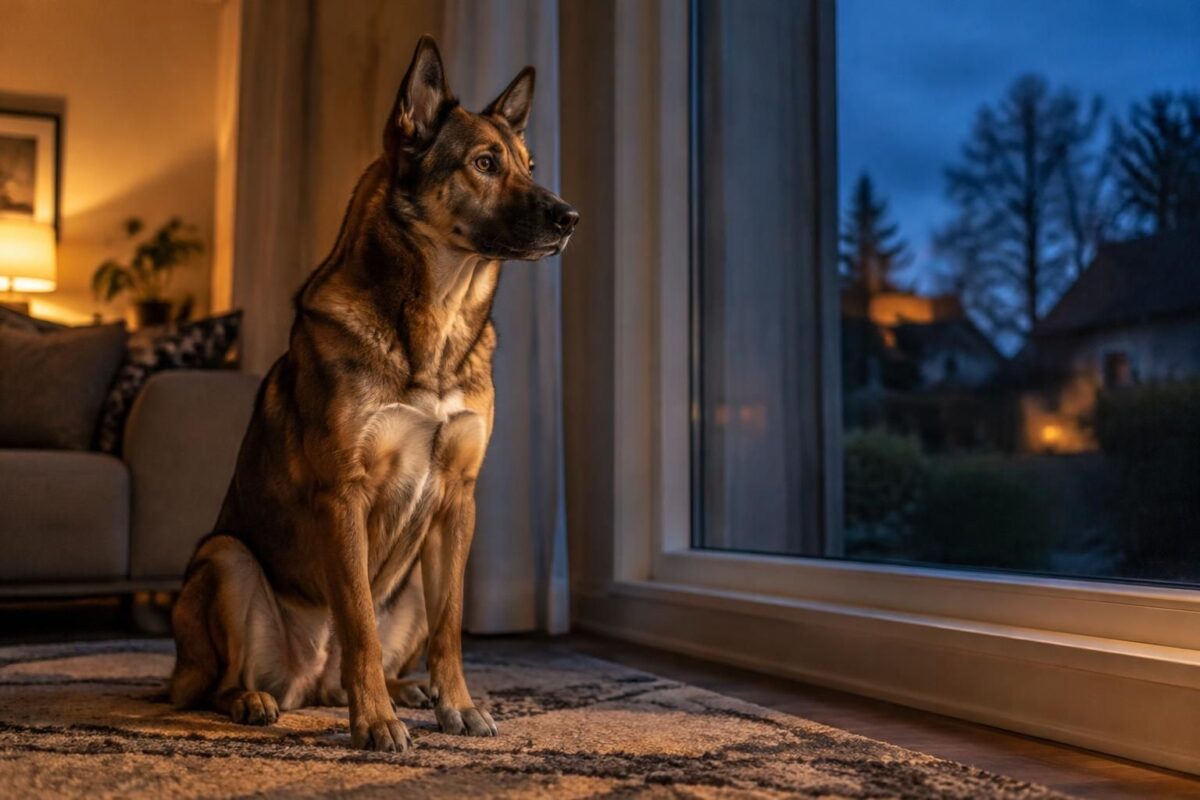
See whether it can lie down and relax its body, or whether it stays tense, ears pricked and gaze fixed on noises. Sustained alertness becomes concerning when it is accompanied by pacing, panting, repeated barking, or an inability to sleep.
A common anecdote from consultations: a dog gets up every time someone passes in the hallway, then eventually falls asleep once the door is closed and the noise has been reduced. This small change to the environment can help reveal what is keeping it on guard.
Unusual behavior is a message to interpret, not a whim. Note what happens beforehand and what helps it relax: these observations will be useful in identifying the cause.
Distinguishing normal vigilance, stress, and pain
If it is reacting to a one-off noise, the dog may calm down once the source disappears. If it is stressed, it may remain tense, hide, or seek more closeness; if it is in pain, it may avoid certain movements or react to being touched.
| Signs observed | Possible causes | Helpful action |
|---|---|---|
| Watches a noise, then relaxes | One-off reaction to the environment | Stay calm and give it a quiet space |
| Gets up often, sleeps little, or isolates itself | Stress, discomfort, or disturbed sleep | Note the circumstances and seek veterinary advice if it persists |
| Whines, limps, or reacts to being touched | Pain or physical discomfort | Contact a veterinarian promptly |
| Sudden aggression or marked lethargy | Significant pain or a health problem | Seek a veterinary assessment without delay |
Helping your dog move out of its alert posture
Avoid scolding it or forcing it to stay lying down. Punishment can increase its anxiety, while a stable space and predictable routine often encourage rest.
- Step 1: For a few days, observe the triggers, rest times, and any changes in appetite or mobility.
- Step 2: Set up a bed in a quiet place, away from walkways and highly stimulating windows. Gently reward moments when it relaxes there.
- Step 3: Consult a veterinarian if the behavior is new, persists, or is accompanied by other symptoms. Depending on their assessment, an animal behavior professional can provide additional support.
If your dog rests better when there is less noise or fewer people passing by, the environment is probably playing a role. If its agitation persists despite this change, or if its overall condition changes, prioritize a health check.
When should you seek professional advice?
A consultation is recommended if the vigilance appeared suddenly, persists, or affects your dog’s sleep and usual activities. Loss of appetite, whining, low energy, or an unusual reaction to touch make an examination even more important.
The veterinarian will first look for a physical cause and may then refer you to an animal behaviorist if needed. The two approaches complement each other: one checks your dog’s health, while the other helps understand the habits and emotions that are keeping it on guard.
A calmer routine is built gradually
Every dog has its own level of vigilance. Protected periods of rest, suitable activities, and predictable interactions often help it relax without disregarding its needs.
Why does my dog watch the house without lying down?
It may be reacting to noises, people passing by, stress, or physical discomfort. Observe the triggers and check whether it can sleep in a quieter place.
How can I tell if its vigilance is related to pain?
Discomfort may be accompanied by limping, whining, difficulty lying down, or a reaction to being touched. A veterinarian can look for a medical cause.
Should I stop my dog from keeping watch?
Avoid punishing or forcing it. Instead, reduce stimulation, provide a safe resting space, and seek advice if the behavior persists.
Who should I consult if my dog is constantly on alert?
Start with a veterinarian to rule out pain and illness. If your dog’s health allows, an animal behavior professional can help adapt its environment and habits.
Thank you for your interest; Romane