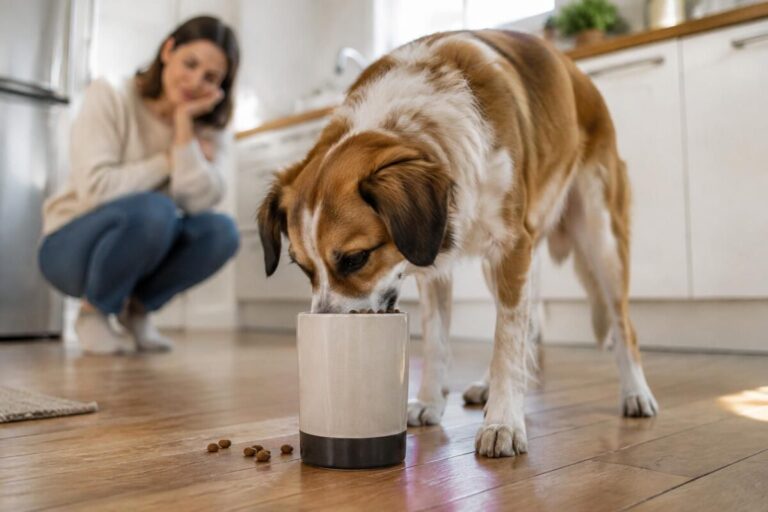

Animal behavior: he chews everything, which accessory to avoid
Hello, this is Romane.
The collar to avoid is one a dog can chew on or that has dangling parts: a collar is not a toy and can cause injuries or get caught on something.
If your dog chews everything, keep their accessories safe and offer them an appropriate chew toy. Redirecting and preventing the behavior are more effective than scolding.
What to do right away
- Keep collars, leashes, and accessories they chew on out of reach.
- Put away cables, shoes, small objects, and products containing toxic substances.
- Offer a chew toy suited to their size and jaw strength.
- Supervise them when they discover a new object or a new chew item.
- Calmly interrupt inappropriate chewing, then praise them as soon as they choose their toy.
Chewing is often normal behavior in puppies: they explore, soothe their gums, or look for something to do. To better understand the causes, also see toys that can frustrate a dog and tips to help them settle down on their own.
Which collar should you avoid if your dog chews everything?
Avoid collars decorated with pendants, long decorations, or parts that are easy to pull off if your dog tries to chew on them. They could swallow a piece or get caught while playing. Also check that the ID tag is securely attached and that nothing hangs down excessively.
A properly fitted collar is an identification accessory, not something to chew on. Don’t leave a leash attached to your dog unsupervised: it could get caught on something. A sturdy leash is useful for walks, but it never replaces close supervision.
Accessories and objects to keep out of reach
Destroying objects can expose your companion to injuries, choking, or swallowing fragments. Electrical cables, small accessories, fabrics, and objects treated with chemicals require particular care.
- Collars and leashes: put them away after walks, especially if your dog chews on them.
- Very hard objects: antlers and hard bones can damage teeth.
- Small pieces: they can be swallowed and cause choking or a blockage.
- Cables and household cleaning products: protect them and keep them out of reach to ensure your pet’s safety.
Instead, choose chew toys designed for dogs, large enough not to be swallowed and suited to their jaw. Even a toy made for them should be taken away if it cracks or sheds pieces.
Why does your dog chew on objects?
For puppies, chewing helps them explore and can soothe their gums during teething, which often occurs between about 4 and 7 months of age. In adult dogs, boredom, stress, or a lack of rest can also encourage chewing.
For example, a young dog that chews on chair legs at the end of the day may be overstimulated or tired rather than “disobedient.” A quiet break, a short scent-based activity, and an appropriate chew item can help them calm down.
Consistent dog training is based on a simple rule: keep forbidden objects out of reach and reward the choice of a safe alternative. Scolding can increase agitation and doesn’t teach them what to chew instead.
Alternatives suited to their age
Choose a soft to moderately firm texture and a size your dog cannot swallow in one go. For a puppy, ask your veterinarian for advice if you’re unsure about the hardness or material, especially during teething.
| Dog’s profile | Option to offer | Precaution |
|---|---|---|
| Young puppy | Soft toy designed for puppies | Supervise the first few uses |
| Puppy teething | Flexible toy suited to their size | Avoid very hard objects |
| Adult dog that chews a lot | Durable toy designed for their jaw | Replace it if it is damaged |
A 3-step method to redirect chewing
- Interrupt without being rough. Remove the forbidden object or call your dog in a calm voice. Avoid pulling on an object they already have stuck in their mouth.
- Offer an alternative right away. Present a suitable toy, then give them time to take an interest in it. Varying textures can keep them motivated.
- Reinforce the right choice. Calmly praise them when they chew on the permitted object. Repeat the same approach and make the room safe to prevent setbacks.
Also put away shoes and small objects, protect cables, and limit access to risky rooms when you can’t supervise your dog. Prevention makes learning easier and stops them from repeating the behavior.
When chewing calls for veterinary advice
If your dog regularly swallows fabric, plastic, or other non-food objects, consult a veterinarian. Vomiting, loss of appetite, abdominal pain, or lethargy after swallowing something warrants an immediate visit.
A sudden increase in chewing, or destructive behavior that occurs mainly when your dog is left alone, should also be looked into. A veterinarian or behavior professional can help identify the cause and tailor the approach.
Which collar should you avoid for a dog that chews everything?
Avoid collars with dangling parts or pieces that are easy to pull off if your dog chews on them. Keep the collar out of reach when it is not in use and regularly check that the ID tag is attached securely.
Can I let my dog chew on their leash?
No. A leash is not designed to be chewed, and pieces of it could be swallowed. Put it away after walks and offer a toy designed for dogs to chew.
Which chew items should I avoid?
Avoid objects that are very hard, too small, or break apart easily. Choose a toy suited to your dog’s size and jaw, and check its condition.
What should I do if my dog swallowed a piece?
Call a veterinarian promptly, especially if your dog is vomiting, seems to be in pain, refuses to eat, or becomes lethargic. Do not try to make them vomit without professional advice.
Thanks for reading! Feel free to share your observations in the comments. — Romane