
Animal Habitat: Do Too Many Accessories Undermine Calm?
Hello, Romane here.
Yes, too many accessories can disrupt a sense of calm if the space becomes cluttered, noisy, or difficult to move around in. Good setup isn’t about adding more objects, but about simply meeting your pet’s needs.
An animal’s habitat should provide familiar features, resting areas, and the option to retreat. To support your pet’s well-being, observe their reactions: their behavior often indicates whether the environment suits them.
Good habits to adopt
- Remove accessories that block pathways or access to their bed.
- Keep a quiet refuge away from noise and people coming and going.
- Choose items based on your pet’s species, size, and habits.
- Introduce new items one at a time, then observe their reaction.
- Choose useful environmental enrichment rather than accumulating objects.
A calming environment gives your pet the choice to move around, play, or take shelter. To spot the effects of a cluttered space, you can also read these tips on objects that take up too much space and this article about a resting area that has become difficult to use.
Too many accessories: when the setup disrupts calm
Pet accessories are not a problem in themselves. They become an issue when they reduce the space available for moving around, obscure resting areas, or create too much visual, auditory, and tactile stimulation.
This sensory overload can make some animals more vigilant or lead them to avoid part of their habitat. A cat that has to go around several toys to reach its litter box, for example, may eventually stop using a route that has become uncomfortable.
The right balance depends on the species
A curious animal may enjoy having its toys rotated, while another may mainly need a stable hiding place and a predictable environment. A useful accessory should support natural behavior, not just fill a space.
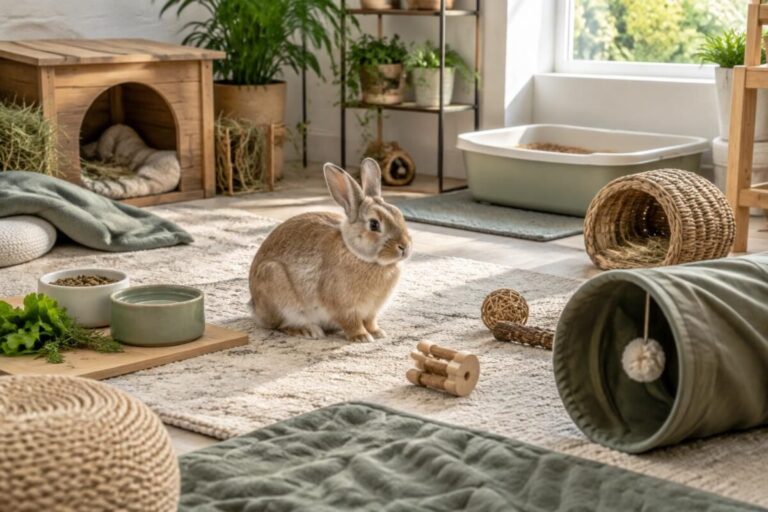
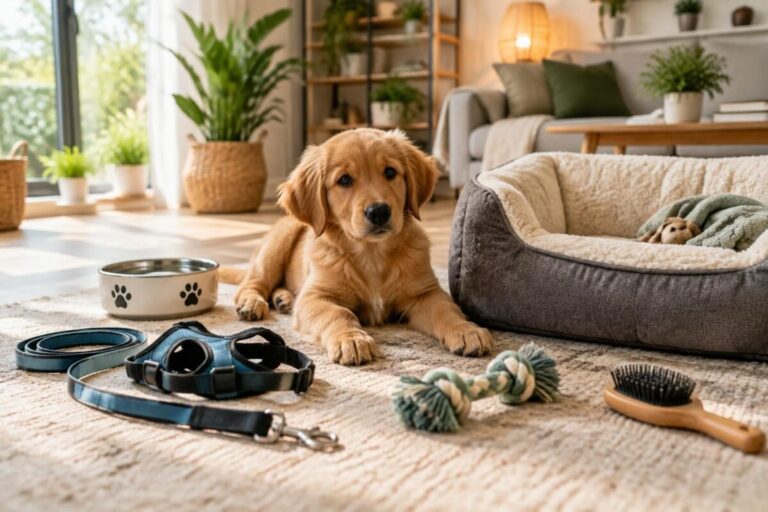
For a small mammal, tunnels and shelters can enrich daily life, as long as clear pathways are left open. For a dog, a few suitable toys and a quiet resting place may be enough; keeping things simple can make resting and moving around easier.
How can you tell if the space is set up appropriately?
Observe your pet at different times: do they eat without being disturbed, reach their bed easily, and use their hiding places? A lasting change in their habits, repeated avoidance, or unusual restlessness is worth paying attention to, but don’t jump to conclusions about a single cause.
Here are a few pointers for adjusting the habitat without randomly removing items your pet finds useful:
| What you observe | Possible cause | Simple action |
|---|---|---|
| They avoid an area | Cluttered or overly exposed pathway | Clear the route and preserve a refuge |
| They startle often | Noise, movement, or stimulating objects | Move the relevant accessories away from their resting area |
| They don’t use a new item | Item is poorly placed or unsuitable | Remove it temporarily and try again later |
| They rest peacefully | Comfortable and sufficiently quiet area | Avoid changing this space unless necessary |
A three-step method for creating a peaceful space
- Observe: note which objects are used, which routes your pet takes, and which areas they avoid.
- Sort: temporarily remove unused accessories or those that obstruct movement, without taking away essential resources.
- Reassess: give your pet a few days to adjust, then make changes based on their behavior and needs.
This gradual approach avoids changing the habitat all at once. It also helps you tell the difference between an accessory that is genuinely causing a problem and an item your pet is attached to.
A well-designed space encourages rest
There is no ideal number of accessories that works for every animal. The priority is to ensure easy access to water, food, resting areas, and places to retreat, while providing appropriate stimulation.
If stress or behavioral changes persist despite simplifying the setup, ask a veterinarian for advice. A calm habitat isn’t an empty one, but a space that is easy to navigate, safe, and suited to the individual animal.
Can too many accessories stress an animal?
Yes, if they clutter the animal’s pathways, disrupt their rest, or create too much stimulation. The effect depends on the species and each animal’s sensitivity.
Should you remove all the toys?
No. Keep the ones that are suitable and used, and remove only those that take up too much space or seem to cause discomfort.
How can you create a quiet spot for your pet?
Choose a stable place away from busy pathways and noise, with an accessible bed or shelter.
How should you introduce a new accessory?
Introduce it gradually, without moving all your pet’s resources at the same time, then observe whether they use it freely.
Thanks for reading! Feel free to share your observations in the comments. — Romane