
Pet habitat: a bulky accessory is taking a toll on the home
Hi, it’s Romane.
An accessory that’s too bulky can clutter your home and reduce your pet’s living space: choose equipment suited to its size and needs.
Creating a well-designed indoor space doesn’t mean removing all the pet furniture. Instead, it helps preserve comfort at home, everyone’s ability to move around, and your pet’s well-being—without turning the living room into an obstacle course.
Things to do now
- Measure the available space before buying a new accessory.
- Check that your pet can get in, get out, and turn around easily.
- Keep the paths to its resting, water, and food areas clear.
- Remove or move equipment it hardly ever uses.
- Choose a compact, stable accessory that’s easy to clean.
A bulky accessory won’t automatically make your home feel cluttered, but it can get in the way and add visual clutter. To identify equipment that takes up too much space and plan a suitable corner, see these tips on bulky accessories in your pet’s living space and setting up a space for your companion.
When pet furniture takes up too much space
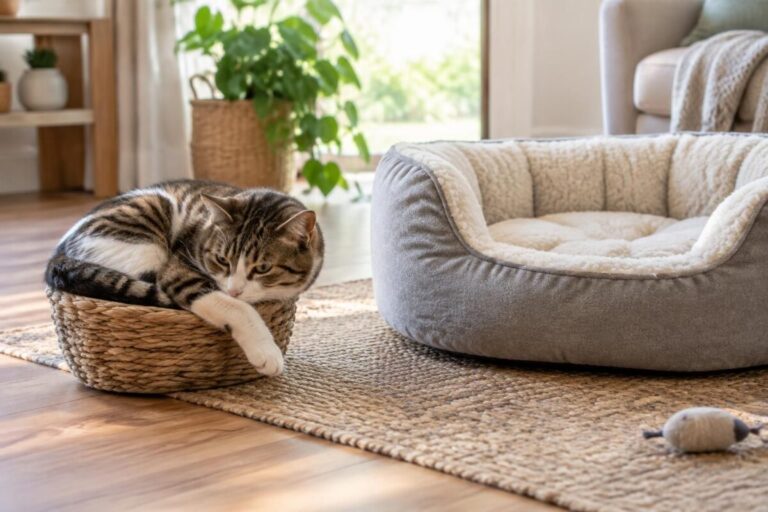
A cat tree placed in front of a door, a large playpen blocking the way, or a bed in the middle of the living room can make everyday tasks less convenient. Having to walk around these items all the time can make your home feel permanently cluttered.
However, what matters most is how well the item is actually used. A bulky bed that your pet loves and that’s placed somewhere quiet may be a better choice than a compact one your pet avoids.
Observe your pet before moving its things
Notice where it likes to sleep, whether it seeks out a quiet spot, or prefers to stay close to family life. A cat that never uses its large cat tree may simply dislike where it’s placed, how stable it is, or how exposed it is to foot traffic.
Avoid suddenly moving a familiar bed or removing a favorite hideaway. To preserve your pet’s sense of familiarity, try a new spot for a few days first and see whether it settles there on its own.
Choose a compact accessory without compromising comfort
Saving space shouldn’t come at the expense of safety or comfort. A bed that’s too small, an unstable scratching post, or a litter box that’s hard to access may go unused, even if it fits perfectly into an organized home.
Before choosing, compare the floor space it takes up, how easy it is to clean, and how it will be used every day. A multifunctional accessory can be practical, as long as it remains stable and your pet can access all its different parts.
| Accessory | What to check | Space-saving option |
|---|---|---|
| Bed | Your pet can stretch out and get up comfortably. | A model suited to its size, placed in a quiet corner. |
| Scratching post or cat tree | The structure is stable and accessible. | A narrow, vertical model, if your cat likes using it. |
| Playpen or rest crate | Your pet has enough room to move around. | A foldable model that can be put away when not in use, as long as removing it doesn’t upset your pet. |
| Toy storage | The toys remain accessible and in good condition. | One small dedicated bin rather than several containers scattered around. |
Reorganize the space in three steps
1. Identify problem spots
Notice where you have to walk around a piece of equipment or where your pet hesitates to pass through. Also make note of accessories that are rarely used and those that seem essential to your pet’s rest or activities.
2. Try a new spot
Move one item at a time without disrupting all your pet’s routines. Keep pathways clear and make sure there’s a resting area away from the main flow of activity.
3. Keep what works
After a few days, see whether your pet is using the new spot and whether it’s easier to move around. If your pet avoids the accessory, go back to a more familiar arrangement or try another place.
Key tips for a home that’s easier to move around in
A well-designed pet space balances your companion’s needs with those of the people who share the home. The best choice isn’t necessarily the smallest one: it’s the one that remains useful, safe, and easy to fit into everyday life.
How can I tell if an accessory is too bulky?
If it regularly blocks a pathway, limits your pet’s access to its resources, or goes unused despite being placed in a suitable spot, consider moving or replacing it.
Can I move my pet’s bed?
Yes, but do it gradually and give your pet time to explore the new spot. Choose a quiet location and see whether your pet settles there on its own.
Is a compact accessory suitable for every pet?
No. It must suit your pet’s size, habits, and mobility. Saving space should never restrict your pet’s movement or compromise its safety.
What should I do with accessories that are rarely used?
First, check that their location and condition are suitable. If they’re still being ignored, you can move them out of the way or put them away, while keeping the equipment your companion needs for its well-being.
Thanks for reading! Feel free to share your observations in the comments. — Romane