
Animal training: clicker, long line, toy—what do you really need?
Hello, this is Romane.
When it comes to dog training, the essential equipment often comes down to just a few things: a suitable leash, a practical way to carry treats and, depending on the method, a clicker.
The right equipment makes learning easier, but it does not replace a method or paying attention to your dog’s needs. It’s better to buy things as you go, when your sessions reveal a genuine need.
Good habits to adopt
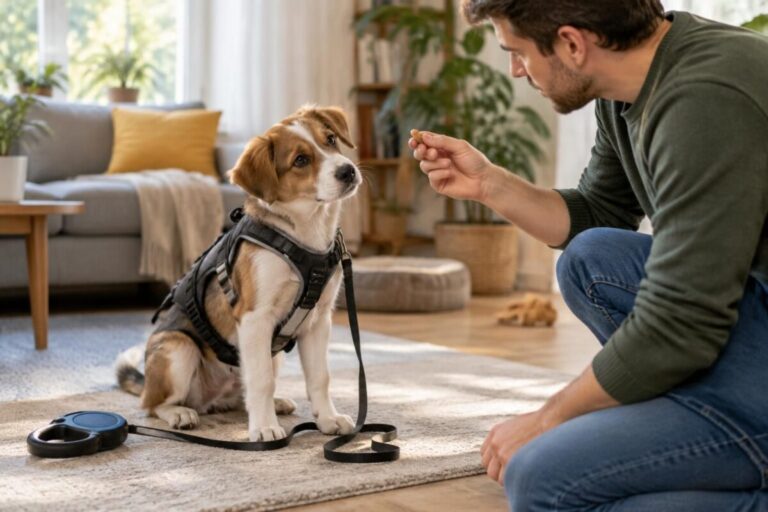
- Start with the essentials: a well-fitted harness, a short leash and an easy-to-open treat pouch.
- Choose a marker with your trainer: a clicker or a short word can be part of the method.
- Save the long line for suitable situations: it gives your dog more distance while keeping them connected to you.
- Notice what motivates your dog: a treat or a training toy can serve as a reward, depending on your dog’s preferences.
- Check your equipment: fastenings, stitching, fit and overall condition all contribute to safety.
A clicker makes a consistent sound, while a marker word costs nothing; a long line helps you maintain some distance without letting your dog off leash. To compare accessories and understand what each one is for, read the guide to long lines, clickers and harnesses, then discover the principles of positive training and building trust.
Clickers, treats or toys: what each accessory offers
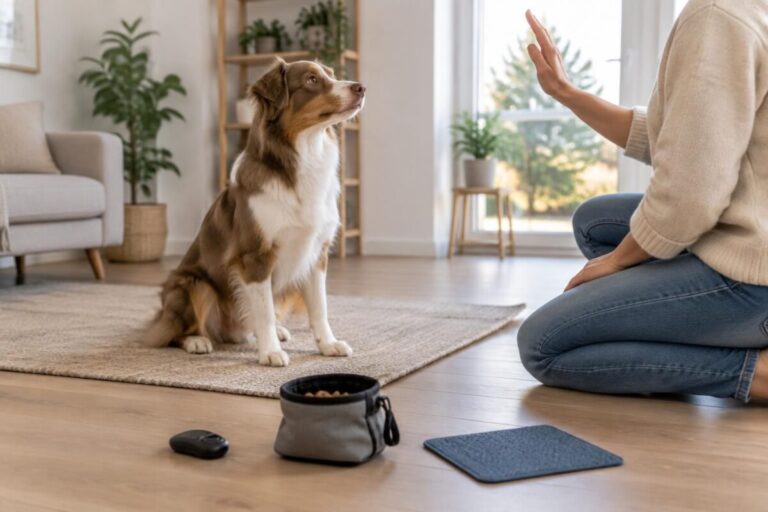
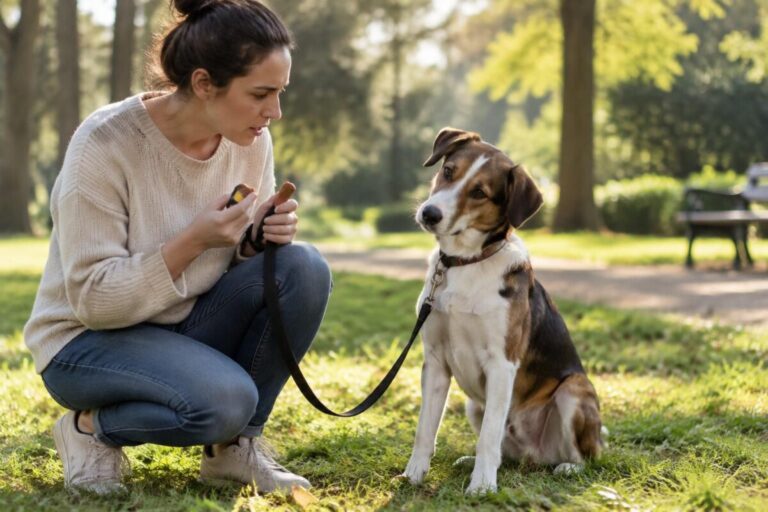
A clicker makes a short, consistent sound. Its usefulness depends on how it is incorporated into training: without a method, it’s just a noise. A short word can serve the same purpose, although its sound may vary depending on your voice.
A treat pouch doesn’t choose the reward; it keeps it close at hand. Check that it opens with one hand, attaches comfortably and has a lining that’s easy to clean.
| Accessory | What it’s for | What to check |
|---|---|---|
| Clicker or short word | Provide a signal associated with the method | Sound, ease of handling or how easy the word is to say |
| Treat pouch | Keep a reward within easy reach | One-handed opening, fastening, cleaning |
| Training toy | Serve as a reward for a dog that’s motivated by play | Suitable size and condition of the toy |
| Short leash or long line | Keep your dog connected during the session | Fastenings, stitching and ease of handling |
| Mat or flat bed | Provide a defined place at home | Grip, ease of care and portability |
A bouncing toy won’t necessarily come back to the person who throws it: whether it returns depends on the dog, not the object. If Nala, for example, prefers chasing a ball to taking a treat, the toy may be more motivating in some sessions, as long as it’s suited to her size and abilities.
Leash or long line: choose according to the session
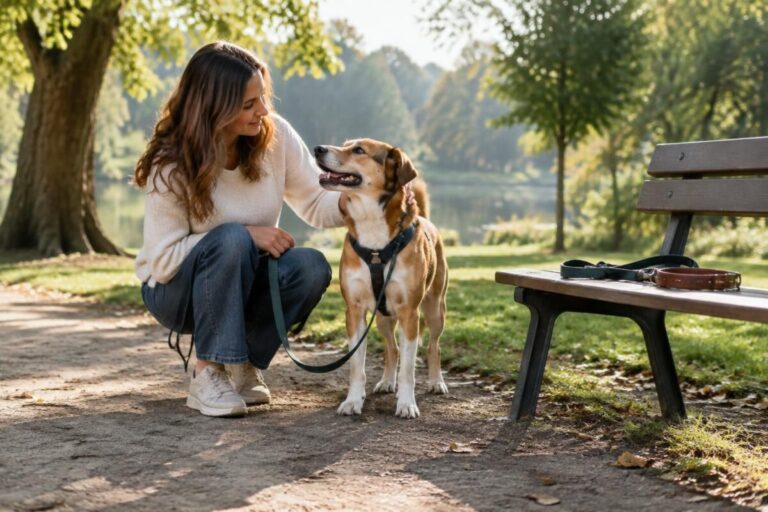
A short leash is suitable for walking close by and practicing exercises in a familiar environment. A long line allows for more distance when the situation permits; it should be attached to the harness, never the collar, and should not be wrapped around your hand.
Before heading out, inspect the clip, stitching and strap, especially if the equipment often rubs on the ground or gets wet. Reliable equipment makes walks easier to manage, but it cannot, on its own, guarantee any particular behavior.
Essential equipment, without unnecessary purchases
A starter kit can be simple: a properly sized harness, a short leash and a treat pouch. Add a clicker if your trainer incorporates it into their method; wait to get a toy, long line or mat until a specific situation makes one useful.
A pouch sold with a clicker or a bag compartment can help avoid duplicates. Before buying, see what you already own and ask yourself whether the item meets a specific need rather than a marketing promise.
A three-step selection process
- Identify the need: note what’s genuinely missing to organize the session or outing.
- Check the fit and how it will be used: measure your dog for the harness and test how easy it is to open, attach and clean.
- Add the rest gradually: choose a long line, toy or marker only if the method and sessions call for it.
Training treats are in addition to your dog’s usual food. Discuss their quantity and how they fit into your dog’s diet with your veterinarian, especially if your dog follows a special diet.
Clickers and training: understanding the difference between a tool and a method
Positive reinforcement is an approach to training, not something you buy in a box. When to use the signal, the pace of the sessions and how to read your dog’s reactions are all part of training guided by a professional dog trainer.
A dog that reacts strongly to sounds needs particular consideration: ask a trainer for advice, or your veterinarian if the reaction concerns you. The equipment you choose should always take your dog’s comfort and needs into account.
Common questions about clickers, long lines and toys
Is a clicker essential for training a dog?
No. Depending on the method, a trainer may use a clicker or a short word. A clicker is a tool, not a method in itself.
What equipment should I buy first?
A well-fitted harness, a short leash and a practical treat pouch are a simple starting point. Add other accessories based on genuine needs and the method you choose.
When should I use a long line?
It keeps your dog connected while allowing them more distance. Attach it to the harness, never the collar, and don’t wrap it around your hand.
Can a ball be a reward?
Yes, if your dog enjoys playing more. Just because a ball bounces doesn’t mean it will automatically come back to you.
Thanks for reading! Feel free to share your observations in the comments. — Romane